
Abstract
This comprehensive guide explores the technical distinctions, operational advantages, and commercial considerations between hybrid inverters and standard inverters in solar power systems.
Created for B2B procurement professionals, system integrators, and facility managers aiming to enhance renewable energy investments by making informed inverter choices, this analysis provides practical insights into architecture variations, grid interaction features, and overall ownership cost considerations.
Understanding these critical distinctions enables strategic technology deployment aligned with organizational energy management objectives and long-term operational resilience.
Understanding Inverter Fundamentals in Solar Systems
Core Function of Standard Inverters
Standard inverters—also called grid-tied or string inverters—serve a crucial but singular purpose: transforming direct current (DC) electricity produced by photovoltaic panels into alternating current (AC) that is compatible with the commercial grid infrastructure.
This process of conversion employs pulse-width modulation (PWM) or more sophisticated maximum power point tracking (MPPT) algorithms to maximize energy collection under different irradiance conditions.
The operational structure follows a one-way energy flow: solar panels → inverter → electrical grid or facility load. Standard inverters match the output frequency (50/60 Hz) and voltage levels to grid standards as required by IEEE 1547 interconnection regulations.
During periods of excess generation, surplus electricity flows to the utility grid under net metering agreements or feed-in tariff programs.
Critical Limitation:
These systems are unable to function during grid outages. When the utility power goes out, anti-islanding protection promptly disconnects the inverter to avoid backfeeding—a safety measure that results in facilities losing power even if sunlight is still present.
This dependency makes standard inverters unsuitable for operations requiring continuous power availability or those located in regions with unreliable grid infrastructure.
Hybrid Inverter Architecture Overview
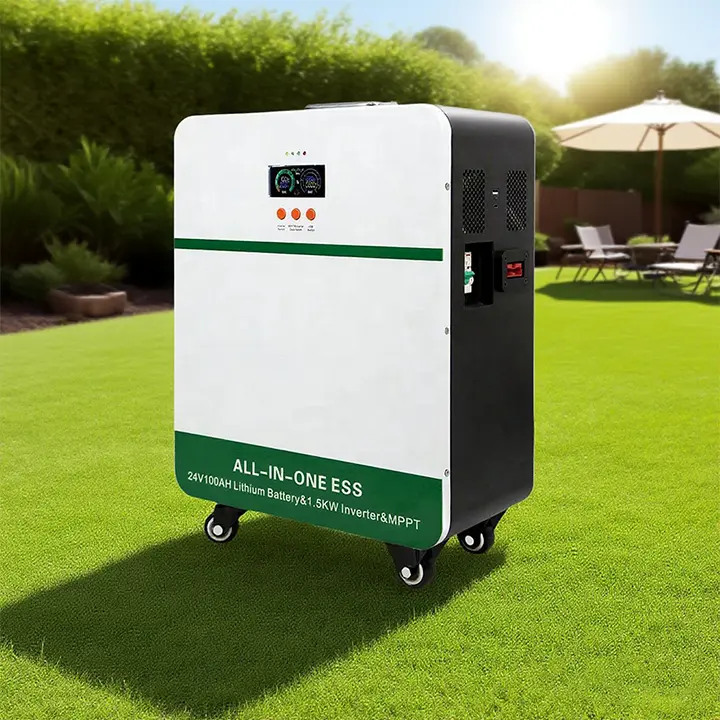
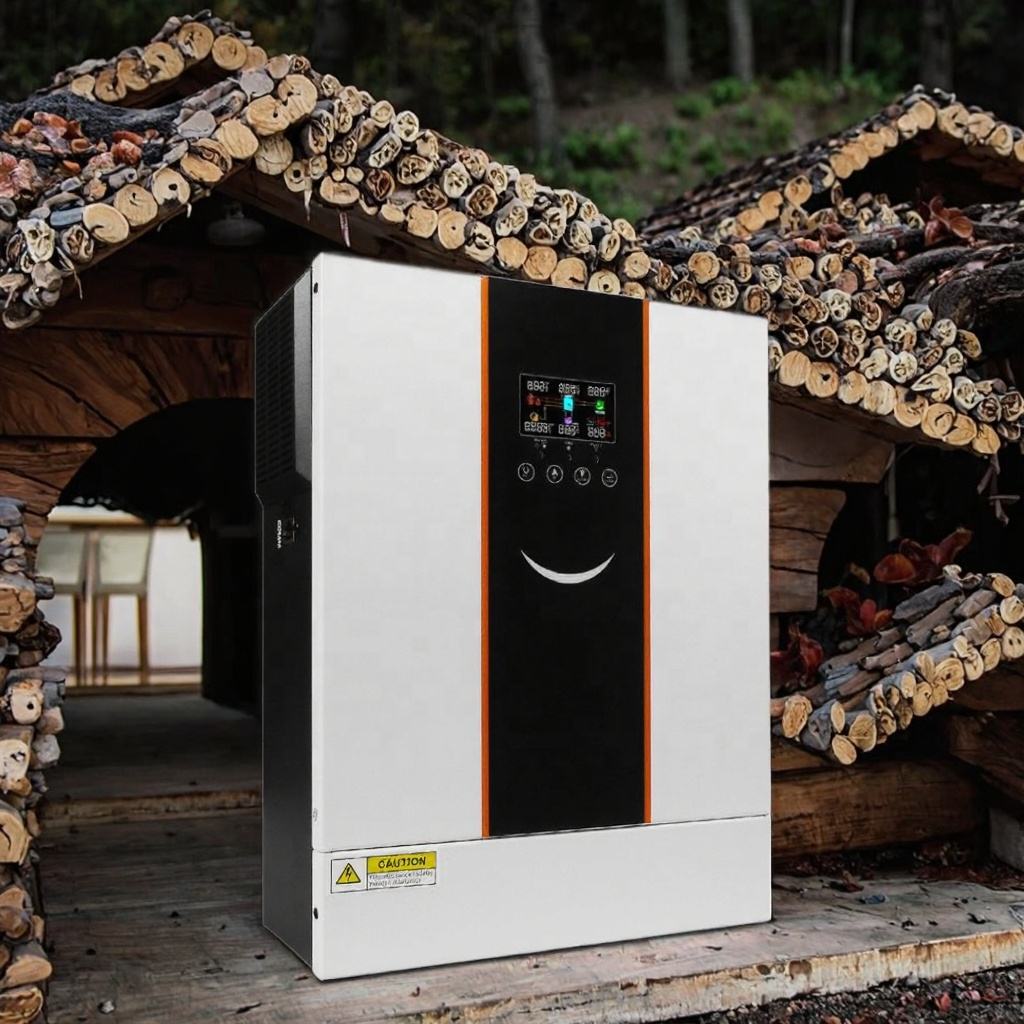
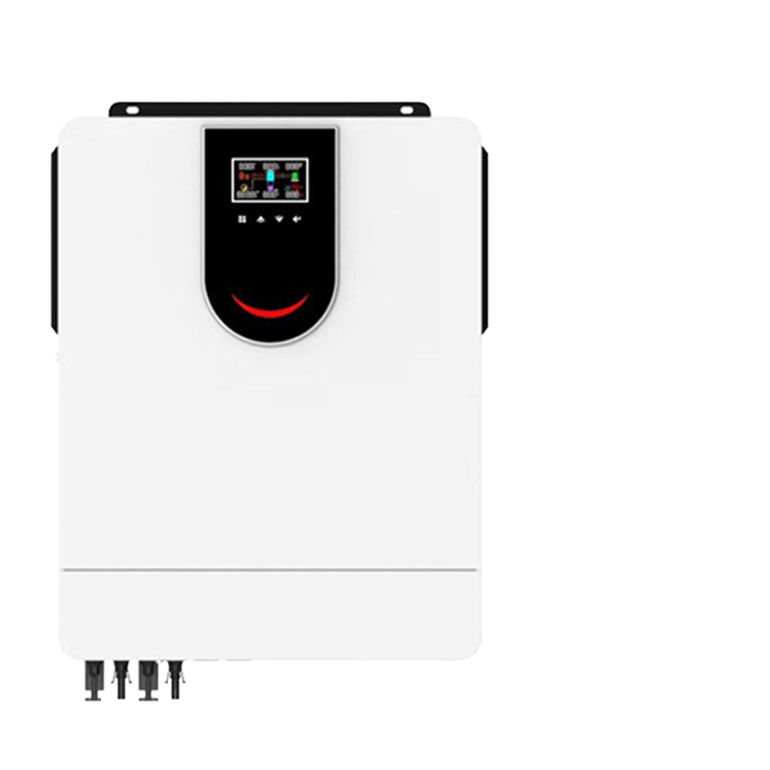
Hybrid inverters combine three essential subsystems into a single platform: DC-to-AC conversion, battery charge control, and smart energy distribution.
This versatile design features a two-way converter that can both charge batteries from solar power and supply stored energy to support facility demands.
The integrated battery management system (BMS) keeps track of cell voltage, temperature, and state-of-charge across lithium-ion (LiFePO₄, NMC) or advanced lead-acid battery banks.
Advanced algorithms stop overcharging, deep discharge cycles that reduce capacity, and thermal runaway situations.
Most commercial-grade hybrid inverters support modular battery expansion from 10 kWh to 500+ kWh configurations, enabling scalability as energy storage needs evolve.
Multi-Mode Operation:
Hybrid systems dynamically switch between grid-tied mode (selling excess solar), self-consumption mode (prioritizing on-site usage), backup mode (islanded operation during outages), and time-of-use optimization mode (charging batteries during off-peak rates).
This operational flexibility transforms solar installations from simple generation assets into comprehensive energy management platforms.
Key Technical Differences: Hybrid vs Standard Inverters
Energy Storage Integration
The fundamental architectural distinction lies in native battery compatibility. Standard inverters require separate AC-coupled battery systems—a configuration that necessitates dual conversion (DC→AC→DC→AC), reducing round-trip efficiency to 85-89%. Hybrid inverters achieve 92-96% efficiency through direct DC-coupled integration, minimizing conversion losses.
Battery Protocol Support: Commercial hybrid inverters communicate via CAN bus or RS485 protocols with battery management systems, enabling real-time monitoring of:
State of charge (SOC) with ±2% accuracy
Depth of discharge (DOD) limits are set to preserve cycle life.
The status of cell balancing across modules connected in series is monitored.
Thermal management is activated when temperature thresholds are reached.
Charge controller specifications define compatibility.
A 50 kW hybrid inverter generally supports a battery capacity of 100-200 kWh with charging rates ranging from 0.5C to 1C (50-100 kW).
Backup power duration calculations depend on critical load profiles: a 30 kW average load with 150 kWh storage provides 5 hours of autonomous operation, excluding solar contribution.
Grid Interaction Modes
Standard inverters operate solely in grid-following mode, needing stable utility voltage and frequency references. When grid voltage fluctuates beyond ±10% or frequency shifts more than ±0.5 Hz, they disconnect immediately according to UL 1741 standards.
Hybrid inverters work in grid-forming mode during outages, independently setting voltage and frequency references to supply isolated microgrids.
Advanced models feature seamless transfer switching with transition times under 20 milliseconds—undetectable by sensitive electronic devices. This function is essential for data centers, healthcare facilities, and manufacturing plants where power continuity directly affects revenue and safety.
Grid-Tie with Battery Backup:
The hybrid mode simultaneously connects to utility infrastructure while maintaining charged battery reserves. Load prioritization algorithms determine energy routing:
- Solar-first: Direct solar-to-load connection minimizes battery cycling
- Grid-support: Battery discharge during peak demand reduces utility charges
- Export limitation: Curtails grid injection to comply with utility interconnection agreements
Power Management Intelligence
Modern hybrid inverters incorporate predictive algorithms leveraging weather forecasts, historical consumption patterns, and utility rate structures.
Machine learning models optimize charging schedules to take advantage of time-of-use (TOU) pricing differences—charging batteries when rates fall below $0.08/kWh and discharging during peak periods when rates exceed $0.25/kWh.
Features that maximize self-consumption monitor load curves in real-time and modify battery dispatch to reduce grid imports. For facilities with demand charges ($/kW), peak shaving algorithms limit the maximum utility draw by supplementing with battery power during consumption spikes.
A properly configured 100 kW hybrid system can reduce monthly demand charges by 30-50%, yielding $2,000-$5,000 in savings for industrial operations.
Technical Specification Comparison
| Parameter | Standard Inverter | Hybrid Inverter |
|---|---|---|
| Power Output Range | 5-100 kW | 5-100 kW |
| Battery Compatibility | AC-coupled (external system required) | DC-coupled (native integration) |
| Peak Efficiency | 96-98% | 97-98.5% (DC-coupled) |
| Round-Trip Efficiency | 85-89% (with battery) | 92-96% |
| Grid Connection Modes | Grid-tied only | Grid-tied, off-grid, hybrid |
| Backup Power Capability | None | Full facility or critical loads |
| MPPT Channels | 2-4 | 2-6 (with battery MPPT) |
| Typical Applications | Net metering, stable grids | Demand charge reduction, backup power, energy arbitrage |
Commercial Value Analysis for B2B Applications
Total Cost of Ownership (TCO)
Initial capital expenditure for hybrid inverters is 40-60% higher than that of standard models. A 50 kW hybrid system costs between $15,000 and $22,000, compared to $8,000 to $12,000 for equivalent standard inverters.
Nevertheless, a 15-year TCO analysis demonstrates strong economic benefits when operational savings are included.
Facilities with TOU rate structures can save $0.12 to $0.18 per kWh by shifting energy use from peak to off-peak times.
An arbitrage cycle of 100 kWh daily can generate annual savings of $4,380 to $6,570, allowing the additional hybrid investment to be recouped within 3 to 5 years.
Demand Charge Reduction: Industrial operations with $15-$25/kW monthly demand charges see immediate savings. Cutting peak demand by 30 kW results in annual savings of $5,400-$9,000—a return on investment (ROI) typically reached within 24-36 months. Manufacturing facilities operating multiple shifts gain the most, as hybrid systems offer 24/7 peak shaving capability.
Avoided Downtime Costs: In critical operations such as pharmaceutical manufacturing and data centers, where hourly downtime costs surpass $10,000, backup power capability justifies hybrid premiums solely through risk mitigation. Preventing a single 4-hour outage recovers the entire system investment.
Regulatory Compliance and Certifications
Both inverter categories are required to meet IEC 62109-1/-2 safety standards that cover insulation coordination, protective earthing, and electromagnetic compatibility. Nevertheless, hybrid systems encounter extra certification challenges because of battery integration and islanding features.
IEEE 1547-2018 Compliance: This interconnection standard requires sophisticated grid support functions, such as:
Maintaining voltage and frequency during disturbances
Injecting reactive power for voltage regulation (from 0.95 leading to 0.95 lagging power factor)
Ramp rate controls prevent sudden generation changes
Hybrid inverters that are certified to IEEE 1547.1 testing protocols demonstrate the grid-forming capabilities that are essential for microgrids. UL 1741 SA certification, which is required in California and increasingly adopted nationwide, validates the functions of smart inverters and provides cybersecurity protections against remote tampering.
Battery-specific standards include UL 9540 certification for energy storage systems, which addresses fire safety, thermal management, and abuse tolerance testing.
Facilities with lithium-ion installations exceeding 50 kWh often need to comply with NFPA 855, which influences installation locations and fire suppression infrastructure.
Application Scenarios and Selection Criteria
Ideal Use Cases for Standard Inverters
Standard inverters deliver optimal value in scenarios prioritizing simplicity and the lowest upfront cost:
Grid-Stable Regions: Areas with fewer than 5 outages annually and average interruption durations of less than 2 hours reduce the economic advantage of backup power. Utility reliability metrics, such as SAIDI and SAIFI indices, inform this evaluation.
Net Metering Programs: Jurisdictions that provide 1:1 net metering credits remove arbitrage opportunities. When surplus generation is credited at full retail rates, battery storage offers limited economic benefit. California’s NEM 2.0 and programs in the northeastern U.S. serve as examples of favorable standard inverter environments.
Cost-Constrained Projects: When capital budgets limit initial investment and operations tolerate grid dependencies, standard inverters maximize installed solar capacity per dollar. Educational institutions and non-profit facilities often prioritize generation capacity over storage sophistication.
When Hybrid Inverters Deliver Superior Value?
Unreliable Grid Infrastructure: Regions that face more than 15 outages per year or experience voltage fluctuations over ±15% need hybrid systems to ensure continuous operation. Manufacturing facilities located in developing markets or rural areas gain considerable advantages from islanding capabilities.
Demand Charge Exposure: Commercial operations where demand charges make up more than 40% of monthly electricity expenses can quickly recover their investment by reducing peak demand. Common examples include:
- Cold storage facilities with compressor loads
- Machine shops with intermittent high-power equipment
- Office buildings with HVAC-driven demand spikes
Time-of-Use Rate Structures: Facilities in markets with >$0.15/kWh peak-to-off-peak differentials profit from energy arbitrage. California, Hawaii, and the northeastern U.S. markets offer particularly favorable economics.
Critical Load Protection: Operations where power interruptions trigger safety hazards, data loss, or production waste justify hybrid systems regardless of outage frequency. Healthcare facilities maintaining vaccine refrigeration, data centers, and semiconductor fabrication plants represent prime applications.
Energy Independence Goals: Organizations aiming for net-zero commitments or trying to withstand utility rate increases utilize hybrid systems to enhance self-consumption. Corporate sustainability requirements are progressively pushing for storage-integrated solutions.
FAQ Module
Q1: Can a standard inverter be upgraded to hybrid functionality after installation?
Retrofitting standard inverters to hybrid operation requires complete equipment replacement—the architectural differences preclude simple upgrades.
However, AC-coupled battery systems can be added to existing standard inverter installations, though at reduced efficiency (85-89% round-trip) compared to native hybrid designs. For facilities planning future storage integration, specifying oversized AC infrastructure (panels, conductors) during initial construction minimizes retrofit costs.
The economic breakeven typically favors hybrid specification during new installations when storage deployment is anticipated within 3-5 years.
Q2: What battery capacity (kWh) is recommended for a 50 kW commercial hybrid inverter system?
Battery sizing depends on application objectives. For backup power, determine the necessary duration for the critical load: a 30 kW critical load needing 4 hours of autonomy requires at least 120 kWh capacity. Applications aimed at reducing demand charges usually need 1.5 to 2 hours of peak load coverage—75 to 100 kWh for a 50 kW system.
Energy arbitrage strategies gain from 2-3 hours of capacity to fully capture TOU differentials. Most commercial 50 kW hybrid systems use 100-150 kWh configurations, which balance performance and capital efficiency. The choice of battery chemistry (LiFePO₄ vs. NMC) affects cycle life: LiFePO₄ systems reach 6,000-8,000 cycles at 80% DOD, compared to 3,000-5,000 for NMC, affecting long-term replacement costs.
Q3: How do hybrid inverters impact solar system warranty and insurance coverage?
Hybrid systems bring extra warranty considerations. Standard solar inverter warranties usually last 10-12 years, whereas battery warranties generally guarantee 10 years or 4,000-6,000 cycles to 70-80% capacity retention.
Integrated hybrid warranties should clearly include coverage for battery management system (BMS) electronics and bidirectional converter components. Insurance providers might raise premiums by 5-15% for lithium-ion setups over 50 kWh because of fire risk concerns—UL 9540A fire testing data can help reduce these premium increases.
Some insurers require fire suppression systems approved by FM Global for installations exceeding 250 kWh. To process warranty claims, documented maintenance records are necessary, including quarterly battery health reports and yearly thermal imaging inspections to identify cell imbalances.
Conclusion
Strategic inverter selection fundamentally influences the performance of solar investments across technical, economic, and operational aspects.
Standard inverters perform well in grid-stable environments with supportive net metering policies and limited capital, providing reliable DC-to-AC conversion at low initial costs.
Hybrid inverters command higher prices due to their operational versatility—allowing backup power, reducing demand charges, enabling energy arbitrage, and optimizing self-consumption that standard systems cannot achieve.
The decision framework emphasizes three criteria: assessment of grid reliability (including outage frequency and duration), analysis of facility load profiles (covering demand charge exposure and TOU rate structures), and operational criticality (considering downtime cost implications).
Facilities that face more than 10 outages per year, have demand charges that surpass 40% of electricity costs, or incur hourly downtime costs over $5,000, realize a strong ROI with hybrid systems—often recouping additional investment within 36 months.
As utility rate structures increasingly penalize grid dependence through reduced net metering credits and escalating demand charges, hybrid inverters shift from being premium options to essential strategic components.
Procurement specifications that look ahead should assess the total cost of ownership over 15 years instead of focusing solely on initial capital expenditure, acknowledging that integrating energy storage is the main trend in commercial solar deployment.
Organizations that align inverter technology with comprehensive energy management objectives position themselves for sustained operational resilience and financial performance in evolving electricity markets.