
Abstract
This comprehensive guide compares mono solar panels and polycrystalline solar panels across efficiency, cost, durability, and application scenarios.
It is designed for B2B buyers, procurement managers, and solar project developers, providing data-driven insights to help you select the optimal solar panel technology for commercial and industrial installations.
The solar panel market has evolved significantly, with monocrystalline technology capturing 85% of new installations in 2024, yet polycrystalline panels remain viable for specific deployment scenarios.
Understanding the technical distinctions, financial implications, and performance characteristics enables informed procurement decisions that align with project ROI objectives and operational constraints.
Understanding Monocrystalline and Polycrystalline Solar Panel Technologies
Crystal Structure and Manufacturing Process
The fundamental difference between monocrystalline solar panels and polycrystalline solar panels comes from the way silicon crystals are formed. Monocrystalline cells are made from single-crystal silicon ingots that are grown using the Czochralski process, which involves slowly pulling a seed crystal from molten silicon at 1414°C. This method creates uniform cylindrical ingots with a consistent atomic structure, leading to higher electron mobility and better electrical conductivity.
Polycrystalline panels use multi-crystal silicon fragments that are melted and poured into square molds. This simpler casting process results in cells with visible grain boundaries where different crystal structures converge. Although manufacturing complexity decreases by 30-40%, these boundaries form resistance pathways that slightly decrease electron flow efficiency.
The purity differential impacts performance: monocrystalline silicon achieves 99.9999% purity compared to polycrystalline’s 99.99%. This 0.0099% difference translates to measurable efficiency gains in photovoltaic conversion. Manufacturing cost disparities have narrowed considerably—monocrystalline production now costs only 8-12% more than polycrystalline due to automation advances and economies of scale in ingot production.
Visual and Physical Characteristics
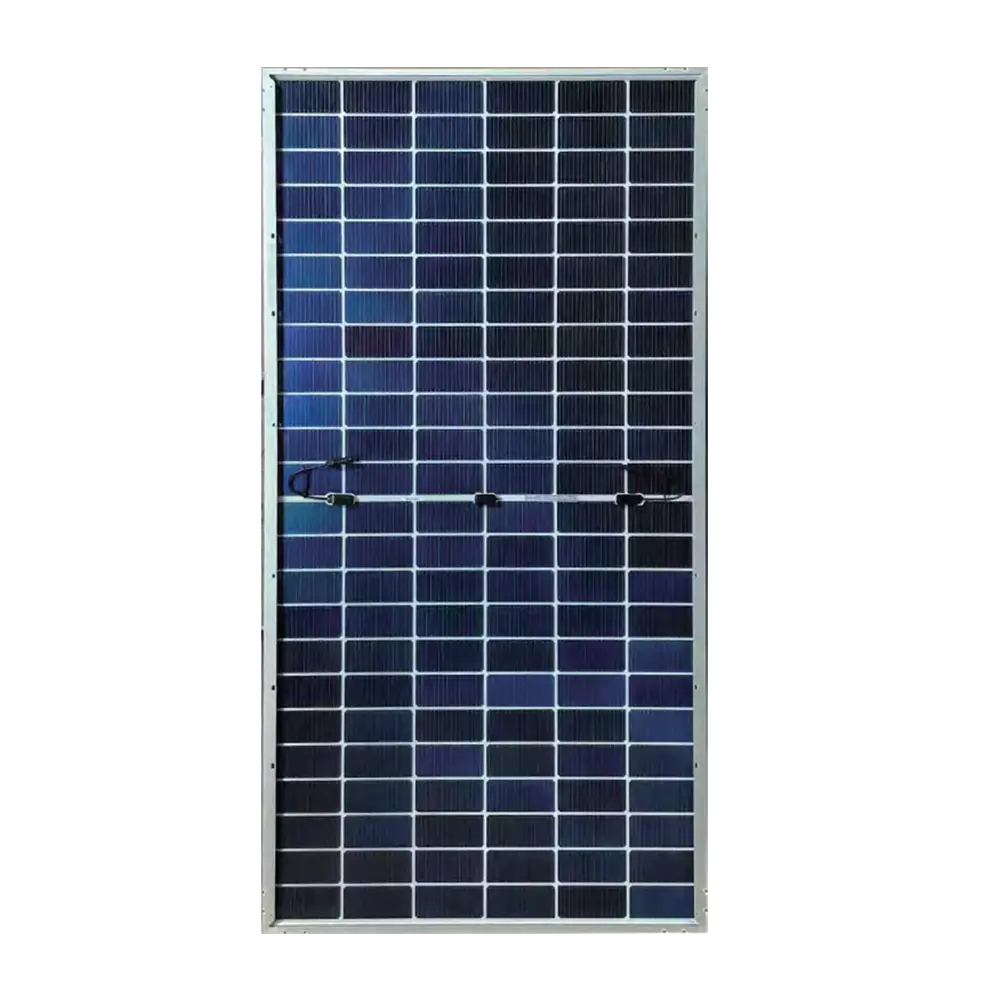
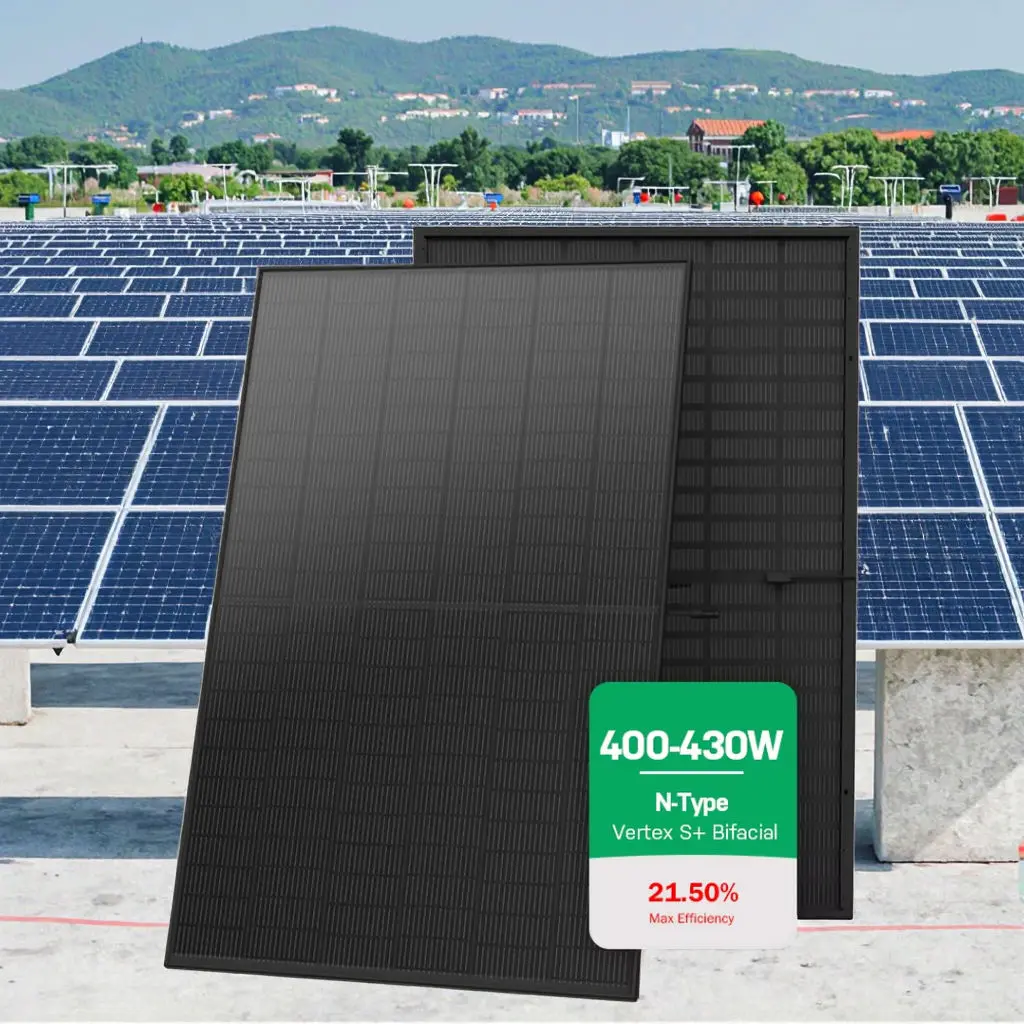
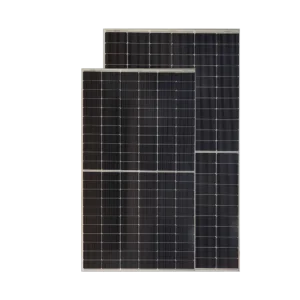
Monocrystalline panels have uniform black or dark blue cells with rounded corners—a result of cylindrical ingot slicing. The consistent look is ideal for architectural integration on commercial buildings where aesthetic uniformity is important for brand image.
Polycrystalline panels show characteristic blue shades with visible crystalline fragments that produce a speckled texture. Square cells optimize space use within panel frames, although the fragmented appearance might be less appealing for high-visibility corporate installations.
For commercial rooftops, the color choice influences thermal absorption: black monocrystalline cells absorb 2-3% more heat than blue polycrystalline cells, although anti-reflective coatings reduce this difference. The weight specifications are similar, with standard 60-cell modules weighing 18-22 kg per panel, ensuring comparable structural load requirements for both technologies.
Performance Comparison: Efficiency, Power Output, and ROI
Efficiency Metrics Under Real-World Conditions
Monocrystalline vs polycrystalline efficiency demonstrates clear differentiation in standardized test conditions (STC):
- Monocrystalline: 18-22% conversion efficiency (premium modules reach 23.5%)
- Polycrystalline: 15-17% conversion efficiency
This 3-5 percentage point gap directly impacts power density: a 400W monocrystalline panel covers 1.95 m², whereas to produce the same output, 2.35 m² of polycrystalline cells are needed—a 20% increase in space.
Temperature coefficient performance highlights operational benefits. Monocrystalline panels generally show a degradation of -0.35%/°C, compared to -0.45%/°C for polycrystalline panels. In conditions where panel temperatures reach 65°C (common in Middle Eastern or Australian settings), monocrystalline panels deliver 3-4% more output than their polycrystalline counterparts.
Low-light performance favors monocrystalline technology. During dawn/dusk periods or overcast conditions when irradiance drops below 200 W/m², monocrystalline cells maintain 85-90% relative efficiency versus 75-80% for polycrystalline. For commercial facilities with consistent energy demand profiles, this extends productive generation hours by 30-45 minutes daily.
Long-Term Degradation Rates and Warranty Analysis
Annual degradation rates significantly impact 25-year lifecycle economics:
- Monocrystalline: 0.3-0.5% annual degradation
- Polycrystalline: 0.5-0.8% annual degradation
After 25 years, monocrystalline panels retain 90-92% of their original capacity, while polycrystalline panels maintain 85-88%. For a 500 kW commercial installation, this 4-5% difference represents 20-25 kW of lost capacity—equivalent to 35,000-44,000 kWh annually at a capacity factor of 18%.
Warranty structures reflect manufacturer confidence:
Mono vs. Poly Technical Specifications
| Parameter | Monocrystalline | Polycrystalline |
|---|---|---|
| Efficiency Range | 18-22% | 15-17% |
| Power Output (W/m²) | 205-230 W/m² | 170-195 W/m² |
| Temperature Coefficient | -0.35%/°C | -0.45%/°C |
| Lifespan | 25-30 years | 25-28 years |
| Cost per Watt (2025) | $0.22-$0.28 | $0.18-$0.24 |
| 25-Year Performance Guarantee | 90-92% | 85-88% |
| Annual Degradation | 0.3-0.5% | 0.5-0.8% |
Tier-1 manufacturers now offer 25-year linear performance warranties for both technologies, though monocrystalline products typically include 30-year extended coverage options—a critical consideration for infrastructure projects with 20+ year planning horizons.
Application Scenarios and Selection Criteria
Space-Constrained Commercial Installations
High-efficiency mono panels provide optimal solutions for urban commercial buildings where roof space commands premium value. Consider a 100 kW installation requirement:
- Monocrystalline: 250 panels × 400W = 490 m² roof area
- Polycrystalline: 310 panels × 320W = 728 m² roof area
The 238 m² difference (48% additional space) often influences whether a project is feasible in metropolitan areas. For multi-tenant commercial buildings, increasing power output per square meter is directly linked to tenant energy capacity and the building’s value.
Weight load considerations favor monocrystalline panels in retrofit applications. Although the weights of individual panels are similar, the lower total number of panels reduces the overall structural load by 18-22%, which may eliminate the need for expensive roof reinforcement in buildings built before 2010.
Aesthetic uniformity is important for corporate campuses and branded facilities. The monochromatic black look of monocrystalline arrays blends effortlessly with contemporary architectural styles, fulfilling LEED certification aesthetic standards and corporate sustainability branding efforts.
Large-Scale Ground-Mount Solar Farms
Cost-effective polycrystalline panels remain competitive for utility-scale projects where land availability exceeds 2 hectares per MW. The 15-20% lower upfront cost per watt creates compelling economics when:
- Land acquisition costs < $5,000/acre
- Grid interconnection capacity exceeds 5 MW
- Project IRR targets remain above 8%
For a 10 MW ground-mount installation in regions with moderate land costs, deploying polycrystalline panels decreases initial capital expenditure by $400,000-$600,000. These savings allows for larger-scale development or investment in advanced inverter technology and monitoring systems.
However, the calculation comparing mono and poly solar panels changes in land-constrained scenarios. When land costs go beyond $15,000 per acre or environmental permits limit development size, the higher power density of monocrystalline panels decreases overall land needs by 35-40%, which can potentially compensate for the higher panel costs by lowering site development costs.
Cost Analysis and Total Ownership Economics
Upfront Investment vs. Long-Term Savings
The price gap between monocrystalline and polycrystalline has compressed significantly. In Q1 2025, wholesale pricing shows:
- Monocrystalline: $0.22-$0.28/watt
- Polycrystalline: $0.18-$0.24/watt
For a 100 kW commercial system, this translates to $4,000-$6,000 additional investment for monocrystalline—a 15-18% premium. However, LCOE (Levelized Cost of Energy) analysis reveals convergence:
- Monocrystalline LCOE: $0.042-$0.048/kWh over 25 years
Polycrystalline LCOE: $0.045-$0.052/kWh over 25 years
The 0.003-0.004 $/kWh advantage for monocrystalline generates $15,000-$20,000 additional value over system lifetime for a 100 kW installation producing 140,000 kWh annually. Payback period calculations demonstrate:
- Monocrystalline: 6.2-7.8 years (depending on electricity rates)
- Polycrystalline: 6.8-8.5 years
In high-electricity-cost regions (>$0.15/kWh), monocrystalline achieves payback 6-9 months faster, while in low-cost areas (<$0.10/kWh), the difference narrows to 2-4 months.
Compliance with International Standards and Certifications
Both technologies comply with IEC 61215 (design qualification) and IEC 61730 (safety requirements), ensuring baseline performance and safety standards. However, certification nuances affect project eligibility:
IEC 61215-1:2021 testing protocols apply identical stress tests (thermal cycling, humidity-freeze, mechanical load) to both panel types. Monocrystalline panels demonstrate 4-6% lower failure rates in accelerated aging tests, though both technologies achieve >99% pass rates from Tier-1 manufacturers.
Regional subsidy programs increasingly favor efficiency thresholds that benefit monocrystalline:
- EU Solar Investment Tax Credit: Requires >19% efficiency (excludes most polycrystalline)
- US ITC Step-Down: No efficiency requirement, both technologies qualify
- China Top Runner Program: Mandates >21% efficiency (monocrystalline only)
Carbon credit implications favor higher-efficiency panels. Monocrystalline’s superior output generates 12-15% more renewable energy certificates (RECs) per installed watt, creating additional revenue streams worth $0.008-$0.012/kWh in active REC markets.
FAQ Module
Q1: What is the typical price difference between mono and polycrystalline panels for a 100kW commercial system?
For a 100 kW commercial installation in 2025, monocrystalline systems are expected to cost between $22,000 and $28,000, whereas polycrystalline systems will range from $18,000 to $24,000 solely for the panels. When including balance-of-system components, the overall installed cost difference falls between $4,000 and $7,000, representing roughly a 15-18% premium.
This gap has decreased from 30-35% in 2020 due to improvements in manufacturing efficiency. The higher energy yield of monocrystalline panels—producing an extra 3,000 to 5,000 kWh annually—compensates for the cost difference, with an added value of $450 to $750 at electricity rates of $0.15 per kWh.
Q2: Do monocrystalline panels perform significantly better in high-temperature climates?
Yes, temperature performance differences are measurable and financially significant. Monocrystalline’s superior temperature coefficient (-0.35%/°C vs. -0.45%/°C) means in climates where panels reach 70°C (45°C above STC baseline), monocrystalline maintains 15.75% efficiency while polycrystalline drops to 13.25%—a 2.5 percentage point advantage.
For a 100 kW installation in Dubai or Phoenix, this translates to 8,000-12,000 additional kWh annually, worth $1,200-$1,800 over the system’s lifetime. The performance gap widens in desert environments with sustained high temperatures.
Q3: Which panel type qualifies for more government incentives in 2025?
Monocrystalline panels increasingly access premium incentive tiers due to efficiency thresholds. The EU’s revised Renewable Energy Directive III offers 15% bonus subsidies for panels exceeding 20% efficiency—automatically excluding most polycrystalline products. Similarly, California’s SGIP program provides enhanced rebates for systems achieving >19% module efficiency.
However, federal programs like the US ITC (30% through 2032) apply equally to both technologies. For projects in jurisdictions with efficiency-based incentives, monocrystalline can unlock $3,000-$8,000 additional subsidies per 100 kW installed, effectively eliminating the upfront cost premium.
Conclusion
The decision on the best type of solar panel depends on three key factors: available installation space, budget limitations, and performance needs. Monocrystalline panels offer higher efficiency (18-22%), improved temperature performance, and reduced degradation rates (0.3-0.5% annually), making them ideal for commercial rooftops with limited space, hot climates, and projects focused on maximizing energy output. This technology typically costs 15-18% more, but this premium decreases to 5-8% when considering LCOE over 25 years.
Polycrystalline panels continue to be economically viable for large-scale ground-mount installations where land costs are low and preserving upfront capital is essential. Their efficiency of 15-17% and slightly higher degradation rate of 0.5-0.8% annually are acceptable trade-offs when the installation area surpasses requirements by 30-40%.
For most commercial and industrial applications in 2025, monocrystalline technology is the prudent investment—providing better long-term economics, increased subsidy eligibility, and future-proofed performance. Nonetheless, site-specific analysis remains crucial. Engage certified solar engineers to model shading patterns, structural load capacity, and local incentive structures before making procurement decisions. Obtain detailed performance simulations using PVsyst or Helioscope software, and confirm manufacturer Tier-1 status via Bloomberg NEF rankings to ensure quality assurance and warranty reliability.