
Introduction
A 12V to 220V Solar Inverter can power your home appliances and car electronics—but only if its wattage, surge rating, and output waveform match the equipment you plan to run. While a 1000W model may struggle with big start-up loads such as a large refrigerator, pump, or air conditioner, it can power everything from LED TVs to laptops, routers, fans, chargers, and common automotive electronics.
Those who need reliable power to power their homes and mobile devices can use a 12V 220V Solar Inverter. In this guide, you’ll learn which appliances it can run, how to choose the right size inverter, and which model is best for off-grid, emergency, or on-the-road power.
Understanding the 12V 220V Solar Inverter: The Heart of Your Off-Grid System
Before diving into compatibility, let’s understand the core technology. A solar inverter acts as the bridge between your battery’s direct current (DC) and the alternating current (AC) that your appliances speak. While pure sine wave inverters produce a smooth, grid-like waveform, modified sine wave inverters—like the JUTA Power 150W to 1000W model mentioned in this article—use a simplified stepping pattern. This fundamental difference dictates which devices run smoothly and which may struggle. No matter which waveform you choose, every reliable solar inverter must convert DC to AC efficiently to avoid energy waste.
How It Works: DC to AC Conversion at 220V
Your 12V battery stores energy, but your household devices require 220V AC. A 12V 220V inverter leverages high-frequency switching technology to boost voltage dramatically while converting the current type. The efficiency of this process directly impacts how long your battery lasts. Most quality units in this category boast efficiency ratings around 85% to 92%, meaning minimal energy loss during conversion. A high-performance solar inverter will also include filtering capacitors to smooth out voltage ripple, extending the life of connected devices.
Key Specifications
Matching your inverter to your load requires understanding three critical numbers:
-
Continuous Power: The sustained wattage the unit can handle.
-
Surge Power: The extra wattage needed to start motor-driven appliances (often 2-3 times running watts).
-
Output Waveform: Modified sine wave (budget-friendly, suitable for simple loads) or pure sine wave (cleaner power, necessary for sensitive electronics).
Waveform Matters: Modified vs. Pure Sine Wave Explained
The waveform is the single most important factor in compatibility. Choosing the wrong type can damage sensitive electronics.
What Powers a Modified Sine Wave Inverter?
Safe for Use:
-
Simple resistive loads (incandescent lights, heating elements)
-
Basic power tools (drills, saws without speed control)
-
Motors in fans and pumps (may run with a slight buzz)
-
Phone chargers and older laptop power supplies
Avoid Using:
-
Digital clocks (will run fast)
-
Medical equipment (CPAP machines)
-
Laser printers and variable speed tools
-
Any device with a silicon-controlled rectifier
A recent academic study found that MSW inverters produce higher voltage fluctuations (222–225.5V) and greater total harmonic distortion than pure sine wave models, though both achieved an 85% efficiency rating. For basic lighting and simple motors, this is acceptable. For precision electronics, it‘s a risk. Before buying any solar inverter, always check whether your target devices have a power factor correction (PFC) circuit—those need a pure sine wave.
When Pure Sine Wave Inverters Are Necessary for Household Appliances
Pure sine wave technology produces a waveform virtually identical to utility grid power. This clean output has total harmonic distortion below 3%. Devices designed for standard AC assume this waveform; feeding them modified power leads to:
-
Overheating motors
-
Audible humming in audio equipment
-
Screen glitches on televisions and monitors
-
Premature battery charger failure
Recommendation: For installations powering modern refrigerators, computers, or entertainment systems, invest in a pure sine wave solar inverter. For basic shop lights, pumps, or simple resistive loads, a modified sine wave unit offers significant cost savings.
Powering Household Appliances with a 12V 220V Solar Inverter
The million-dollar question: What can you actually run? The answer depends entirely on the inverter’s continuous wattage rating. The following table uses real-world data for a typical 12V 220V solar inverter rated at modified sine wave output.
Wattage Requirements for Common Household Appliances
| Appliance Category | Typical Running Watts | Typical Surge Watts | Safe with 600W Inverter? | Safe with 1000W Inverter? |
|---|---|---|---|---|
| LED Television (32″) | 30–60W | 60W | ✅ Yes | ✅ Yes |
| Laptop Computer | 50–100W | 100W | ✅ Yes (1 at a time) | ✅ Yes |
| Ceiling Fan | 50–80W | 120W | ✅ Yes | ✅ Yes |
| Refrigerator (Energy Star) | 100–200W | 600–1200W | ⚠️ May struggle at the start | ⚠️ Possible if surge <1000W |
| Microwave Oven (700W) | 700–1100W | 1100W | ❌ No | ⚠️ Only if <1000W rating |
| Coffee Maker | 800–1200W | 800–1200W | ❌ No | ⚠️ Only if <1000W |
| Small Air Compressor (1 HP) | 800–1000W | 1600–2000W | ❌ No | ❌ No |
| Space Heater | 1000–1500W | 1000–1500W | ❌ No | ⚠️ Only low setting |
How Much Inverter Power Do You Really Need for the Home?
Do not simply add up all your devices‘ running wattage. The correct sizing approach has three steps:
-
Identify your highest surge appliance and add its surge wattage.
-
List all devices running simultaneously and add their running wattage.
-
Multiply the sum of continuous loads by 1.25 (safety margin, never run an inverter at 100% continuous capacity).
Scenario Example: Running lights (100W), a laptop (70W), and a small refrigerator (150W running, 450W surge) requires an inverter capable of sustaining 320W continuously while handling a 450W surge. A 500W solar inverter from JUTA‘s product range would barely survive the surge. A 1000W unit provides comfortable overhead. When in doubt, choose a larger solar inverter—running at 50-70% of rated capacity dramatically increases lifespan.
Critical Note on Motor-Driven Appliances
Appliances with electric motors—refrigerators, pumps, compressors—require significant startup current, often 2-3 times their running wattage. Many beginners purchase an inverter based on an appliance‘s rated wattage, only to find it trips overloading the moment the compressor kicks in. If you need to run a standard 150W refrigerator, do not use a 300W inverter. Use a 600W or 1000W unit to handle the surge.
Car and Mobile Applications: Power on the Go for Automotive Devices
The versatility of a 12V solar inverter shines in automotive environments. Since your vehicle‘s electrical system already operates at 12V DC, installation is straightforward. However, the inverter draws significant current, so respecting your alternator‘s and battery‘s limits is essential. For road trips and overlanding, a portable solar inverter that plugs into a cigarette lighter can keep your camera batteries and drone chargers running for days.
Can a 12V 220V Inverter Run 12V Car Devices Directly?
This is a common misconception. A 12V to 220V inverter does not power 12V car appliances directly. It creates 220V AC from 12V DC. To power a native 12V cooler or tire inflator, you need a direct connection to your battery or a 12V accessory outlet. The inverter‘s purpose is to bring standard 220V household devices into the vehicle—laptops, camera chargers, portable fridges designed for AC power, and small entertainment systems.
Ideal Scenarios for Automotive Inverter Use
Cab Comfort (Truckers & RVs): Keep a laptop charged, run a small fan, and power a portable DVD player for passengers. A 150W to 300W unit suffices for these needs.
Electric Vehicle Accessory Power: Some EV owners carry small backup solar inverter units to run household electronics without draining the main drive battery.
Job Site Power: Mobile trades benefit from a moderate-sized inverter connected to their work truck’s auxiliary battery, powering radios, small chargers, and basic power tools. However, note that modified sine wave inverters may cause variable speed tools to run less efficiently or create excess heat.
Battery Draw Calculation
In real-world vehicle setups, many users are surprised by how quickly a 1000W inverter can drain a starter battery. At 85% efficiency, actual draw approaches 98 amps. A standard car battery (50-70 Ah) would deplete in under 30 minutes—and may not restart your engine afterward. Always run a vehicle inverter while the engine operates or use a dedicated deep-cycle auxiliary battery. For serious off-grid autonomy, pair your system with a solar inverter charger that can replenish your battery when AC shore power is unavailable. (Note: Solar inverter chargers are specialized units; here we focus on standalone models.)
Design, Technology & Safety Features of Modern Inverters
Modern solar inverter units, including those manufactured by JUTA Power, include sophisticated protection circuitry that prevents common user errors.
Smart Protection Systems
-
Short Circuit Protection: Immediately shuts down output to prevent damage if wiring faults occur.
-
Overload Protection: Automatically disconnects before sustained over-current damages internal MOSFETs.
-
Over-Voltage Shutdown: Prevents your sensitive electronics from receiving dangerously high voltage.
-
Over-Temperature Derating: Some units reduce output wattage as internal temperatures rise, prioritizing longevity over immediate shutdown. A well-engineered solar inverter will also include reverse polarity protection on the DC input side, saving your unit from accidental cable swaps.
Physical Design and Build Quality
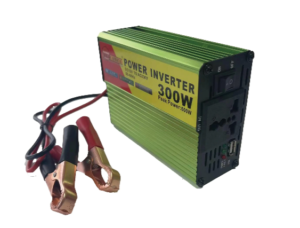
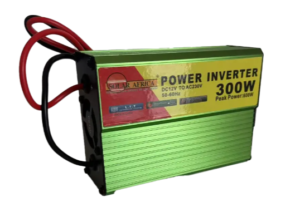
Handheld and portable 12V 220V inverters typically range from 0.55 kg for 300W models to heavier units at higher capacities. The JUTA Power unit‘s compact size (140×105×55mm) fits easily in a glove compartment or electronics bag, making it ideal for travelers needing backup power without cargo space sacrifice. Passive cooling or smart fan cooling extends device life; ensure your unit has ventilation clearance during high-load operation.
Thermal Management: The Silent Performance Killer
Heat is the enemy of reliable power conversion. Modified sine wave inverters naturally run warmer than pure sine wave counterparts due to harmonic distortion in their output. For continuous operation near max load, consider these best practices:
-
Mount the inverter with at least two inches of clearance on all sides.
-
Add a dedicated cooling fan if the unit operates in hot environments.
-
Never operate a solar inverter inside a sealed electronics cabinet without ventilation.
Comprehensive Compatibility Guide: What to Run and What to Avoid
For clarity, here is a simple decision matrix for modified sine wave inverter users. If you own a pure sine wave inverter, disregard the warnings—it runs nearly everything.
Compatible (Smooth Operation)
-
Incandescent and LED lighting
-
Toasters and coffee makers (resistive heating elements)
-
Soldering irons and glue guns
-
Phone chargers (basic transformer-based)
-
Older televisions without sensitive power supplies
-
Fans and pumps (expect potential motor buzz)
Limited Compatibility (May Run, But Watch for Noise/Heat)
-
Laser printers (may cause print distortion)
-
Variable speed drills (may run at unpredictable speeds)
-
Older desktop computers (check power supply type)
-
Fluorescent lights with magnetic ballasts (may hum)
Not Compatible (High Risk of Damage or Malfunction)
-
Medical devices (CPAP, oxygen concentrators, electric wheelchairs)
-
Modern flat-screen TVs with active PFC power supplies
-
High-end audio equipment
-
Microwave ovens (will lose cooking power and may damage the magnetron)
-
Battery chargers for cordless tools (can overheat and destroy batteries)
-
Any device with a silicon-controlled rectifier or triac dimmer
Performance Data: Academic Verification
A 2025 academic paper concluded that pure sine wave inverters deliver more consistent voltage (221–222V, ±1V fluctuation) with low harmonic distortion (2.5%) compared to MSW units (222–225.5V range, higher THD). While both achieved 85% efficiency, pure sine wave offerings “significantly surpass” modified units regarding long-term reliability, making them the “more appropriate choice for permanent solar PV installations”. However, MSW inverters remain “viable for less demanding applications when cost is considered”. This academic validation confirms that for moving job sites, basic RV setups, or emergency backup wiring, a quality modified sine wave solar inverter from a reputable manufacturer provides robust service without a premium waveform investment.
Sizing Your System Correctly: Selection Flowchart
| Question | Yes | No |
|---|---|---|
| Are you powering any medical equipment? | Pure sine wave inverter required | Continue |
| Will you run a laser printer or a variable speed motor? | Pure sine wave strongly recommended | Modified sine wave acceptable |
| Is your total continuous load under 800W? | 1000W inverter sufficient | Consider 1500W+ inverter |
| Will you run multiple motor loads simultaneously? | Add the surge watts of the largest motor to the total running watts of others. | Safe to proceed |
| Is your battery bank rated for the inverter‘s max draw? | System properly matched | Add additional battery capacity |
FAQ
1. Does a 12V 220V inverter drain my car battery quickly?
Yes, especially at high loads. A 1000W inverter draws ~85 amps. Always run with the engine on, or use a dedicated deep-cycle auxiliary battery.
2. Can I charge my laptop through a modified sine wave inverter?
It depends. Most modern laptop power supplies work fine, but some may produce a slight hum or run warm. A pure sine wave is safer for long-term use.
3. What happens if I overload my solar inverter?
Inverter overload triggers automatic shutdown. Remove excess load to reset. Repeated overloads can permanently damage internal components.
4. Why does my microwave run slower on a modified sine wave inverter?
Microwave ovens require pure sine wave power for proper magnetron timing. Modified sine wave causes 30-50% power loss and damages the unit over time.
5. Can I use a 12V 220V solar inverter for off-grid living full-time?
Yes, with careful planning. Match inverter wattage to peak loads, use deep-cycle batteries, and consider a pure sine wave for sensitive devices.
Conclusion
A 12V 220V solar inverter is a remarkably versatile tool. For small appliances, basic lighting, laptop charging, and moderate power tools in mobile settings, the 150W to 1000W class delivers exceptional value. The key to success lies in accurately calculating your load wattage—especially surge requirements—and respecting the waveform limitations of modified sine technology. Avoid high-surge appliances like large refrigerators or microwaves, and never overload your unit. For permanent off-grid living or sensitive electronics, pure sine wave remains the standard. No matter your application—camping, emergency home backup, or professional mobile work—selecting the right solar inverter is the single most important decision for system reliability and device safety.
Ready to choose your ideal solar inverter? Explore JUTA Power‘s complete line of automotive and off-grid power conversion solutions. Whether you need a compact 150W unit for emergency phone charging or a robust 1000W model for job site power, our solar inverter range includes protection features like short circuit, overload, and over-temperature shutdown to keep your devices safe.
Contact the JUTA Power sales team today to discuss your specific power requirements, or browse our product specifications to find your perfect match. Power your adventure confidently—choose your 12V 220V solar inverter now.