
Introduction
If you’re aiming for true energy independence—whether powering a remote cabin, an RV, a farm, or a telecom tower—the inverter you choose will determine the success of your entire system. Not just any inverter will do. You need an off grid hybrid inverter that integrates seamlessly with your batteries, solar panels, and lifestyle, while staying within your budget. Choosing the right one is often the most critical decision in any off‑grid project.
So why focus on multi-voltage? Because one size doesn’t fit all. A 12V system might work for a weekend camper van, but it can be dangerously inefficient for a full‑sized homestead. A 48V system, by contrast, is the standard for serious home‑scale power. A true off grid hybrid inverter handles all three—12V, 24V, and 48V—letting you build what you need today and scale easily tomorrow.
The global solar hybrid inverter market was valued at USD 11.3 billion in 2024 and is projected to reach USD 23.55 billion by 2033, growing at a CAGR of 8.5%. This growth reflects a simple reality: more people than ever want to break free from the grid. And the ones who succeed start with the right inverter from day one.
What Exactly Is an Off Grid Hybrid Inverter?
Let’s start with the basics. A traditional off grid solar inverter converts DC power from a battery bank into AC power for your appliances. Simple enough. But a hybrid solar inverter does much more: it manages multiple energy sources—solar panels, batteries, and even a backup generator or the grid—within a single unit. In short, a true off grid hybrid inverter acts as the brain of your entire power system, seamlessly switching between sources as needed.
The key difference: a grid‑tied inverter shuts down during a power outage, leaving you in the dark. An off grid hybrid inverter, however, keeps running. It powers your home from your batteries and solar panels, even when there’s no grid available.
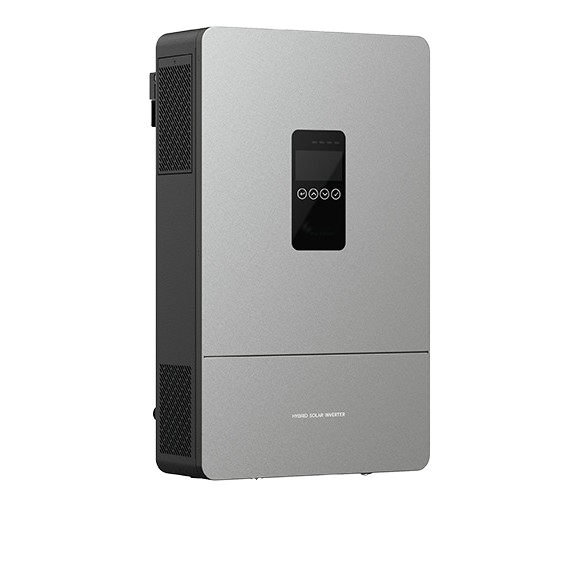
The model we’re highlighting takes this a step further. It’s a 1.0‑10KW pure sine wave hybrid solar inverter with three standout features: 93% efficiency, a bright LCD for real-time monitoring, and most importantly, multi-voltage support for 12V, 24V, and 48V battery banks. Few inverters in this class offer that level of flexibility.
Why Multi-Voltage Flexibility Matters
You might wonder: “Why not just pick one voltage?” The answer is simple—different setups demand different voltages, and your needs may evolve.
A multi-voltage off grid hybrid inverter lets you select the right voltage for your project now and adjust it later if needed. That adaptability transforms a short-term purchase into a long-term solution.
12V Systems – Small, Portable, Beginner-Friendly
A 12V off grid power system is ideal for RVs, camper vans, small boats, and weekend cabins with minimal energy needs—like lights, phone charging, or a small fridge. Components are widely available and affordable. But be careful: loads above 2000W can draw dangerously high current, requiring thick, costly copper wiring. For example, a 12V system drawing 3000W pulls over 250 amps—enough to overheat cables if not properly designed.
24V Systems – Perfect for Mid-Sized Setups
A 24V system halves the current for the same power output. This means smaller wires, lower voltage drop over longer distances, and cooler operation. It’s ideal for larger RVs, tiny homes, remote workshops, or off-grid cabins consuming up to 4000W continuously. Many users start with 12V and upgrade to 24V as they add more appliances—multi-voltage inverters make this upgrade seamless without having to replace the entire unit.
48V Systems – The Professional Standard
For home-scale off-grid systems between 3kW and 10kW, 48V is the industry standard. At this voltage, the current is only a quarter of what it would be at 12V for the same output. That means smaller wiring, less energy lost as heat, and the ability to power large loads—like well pumps, electric water heaters, and workshop tools—efficiently. High-voltage systems are also lighter, more cost-effective, and experience significantly less transmission loss over long cable runs. A multi-voltage off grid hybrid inverter that supports 12V, 24V, and 48V lets you start small and scale up without replacing core equipment.
Pure Sine Wave vs. Modified Sine Wave – Why It Matters
Let’s address something that often gets overlooked: waveform quality. A pure sine wave inverter produces AC power that’s identical to (or even cleaner than) what comes from the utility grid. A modified sine wave inverter produces a choppy, stepped approximation that can damage sensitive electronics.
Here’s what runs poorly—or not at all—on modified sine wave:
-
Refrigerators and freezers (compressors overheat)
-
Microwaves (hum loudly and cook unevenly)
-
Medical devices (CPAP machines, oxygen concentrators)
-
Variable‑speed power tools
-
Laser printers and copiers
-
Any device with a microprocessor
The product we’re discussing delivers pure sine wave output across the entire load range. That means your expensive electronics run safely, your refrigerator compressor operates efficiently, and you never have to worry about strange buzzing noises or premature equipment failure. A quality off grid hybrid inverter always prioritizes pure sine wave output, because your appliances depend on it.
How a Multi‑Voltage Off Grid Hybrid Inverter Compares to Other Options
Let’s put this in perspective. Below is a head‑to‑head comparison between a multi‑voltage off grid hybrid inverter, a standard single‑voltage off‑grid inverter, and a grid‑tied inverter.
| Feature | Multi‑Voltage Off Grid Hybrid Inverter | Standard Off‑Grid Inverter | Grid‑Tied Inverter |
|---|---|---|---|
| Voltage Options | 12V / 24V / 48V (switchable) | Fixed (usually 12V or 24V) | N/A (grid‑referenced) |
| Works Without Grid | Yes | Yes | No (shuts down during outage) |
| Battery Charging from Solar | Yes (built‑in MPPT) | Yes | No (requires separate charge controller) |
| Generator Integration | Yes | Optional | Rare |
| Scalability | High (voltage upgrade without replacing the inverter) | Low | Medium |
| Pure Sine Wave Output | Yes (standard on quality units) | Varies (many are modified sine) | Yes |
| LCD Monitoring | Yes (built‑in) | Optional | Usually external |
| Typical Use Case | Homes, cabins, RVs, remote infrastructure | Small RVs, basic cabins | Urban grid‑connected homes |
A multi‑voltage off grid hybrid inverter offers unmatched flexibility for anyone serious about energy independence. It handles solar charging, battery management, generator backup, and pure sine wave output—all in one package, with voltage options that let you build exactly the system you need. If you’re comparing different models, always check whether the off grid hybrid inverter supports your target voltage range out of the box.
Real‑World Applications – Where This Technology Shines
The beauty of a multi‑voltage off grid solar inverter is its versatility. Here are five scenarios where it’s the perfect fit.
Remote Cabins and Vacation Homes
Thousands of cabins across North America, Europe, and Australia sit miles from the nearest power line. Running grid electricity to them can cost 20,000–50,000 per mile—or more. A properly sized off grid solar power system with a 3–5 kW multi‑voltage inverter pays for itself in a few years. Set the inverter to 48V for a full‑size cabin with a refrigerator, lights, internet, and occasional power tools.
RVs, Vans, and Overlanding Rigs
The RV and van‑life market has exploded. A compact off grid hybrid inverter with 12V support is the perfect heart of a mobile solar system. Many overlanders are now upgrading to 24V systems for better efficiency while keeping the same inverter. Multi‑voltage support means you can start with a simple 12V setup and later reconfigure your batteries for 24V without buying a new inverter.
Farms and Agricultural Operations
Rural farms often need power for water pumps, electric fencing, workshop tools, and lighting—sometimes miles from the nearest grid connection. A 5–10 kW off grid hybrid inverter set to 48V can handle all of it, and the built‑in generator input ensures you never run out of power during extended cloudy periods.
One agricultural ranch in the US deployed a robust off‑grid solar energy storage solution using a residential hybrid inverter. The family successfully achieved a reliable, uninterrupted power supply that significantly improved their quality of life.
Telecom Towers and Remote Infrastructure
Cell towers, weather stations, security cameras, and remote monitoring equipment all need reliable DC power. A smaller off grid solar inverter (1–3 kW) running at 12V or 24V is often the ideal solution, keeping critical infrastructure online for years with minimal maintenance.
Emergency Backup for Grid‑Connected Homes
Even if you have grid power, a hybrid solar inverter can serve as a whole‑home backup system. Install it with a battery bank and solar panels, and you’ll have power during outages while saving money on your electric bill the rest of the time. The built‑in battery charger keeps your batteries topped off from solar or the grid, automatically.
Efficiency, Reliability, and What the Numbers Actually Mean
Let’s talk about specifications that actually matter.
93% Efficiency – Is That Good?
The inverter in question delivers 93% efficiency. Here’s what that means in real terms: for every 1000 watts of DC power coming from your solar panels or batteries, you get 930 watts of usable AC power. The remaining 70 watts are lost as heat.
Is 93% good? Absolutely. Top‑tier residential inverters from premium brands can reach 96–97%, but they cost significantly more. In the budget‑friendly and mid‑range off grid hybrid inverter market, 93% is solid. For comparison, many lower‑end inverters operate at 85–90%. That 3–8% difference adds up over years of daily use: a 3% efficiency gain on a 5 kW system running 5 hours per day saves about 75 kWh per month.
MPPT Solar Charging – Why It’s Non‑Negotiable
Quality off grid solar inverters include a built‑in MPPT (Maximum Power Point Tracking) solar charge controller. Unlike cheaper PWM controllers, an MPPT controller continuously adjusts the electrical load to extract the maximum possible power from your solar panels—especially important on cloudy days or in the early morning and late afternoon.
Modern MPPT controllers achieve tracking efficiency of up to 99.9%, ensuring that every available watt from your panels gets stored in your batteries.
Lifespan and Warranty – What to Expect
A high‑quality off grid hybrid inverter typically lasts 10–15 years with proper installation and maintenance. The unit in question comes with a 5‑year warranty, which is the standard for hybrid inverters in this power class. Solar panels, by comparison, can last 20–30 years, so you’ll likely replace your inverter once over the life of your solar array.
Remote Monitoring and Smart Controls
One of the most valuable features of modern hybrid solar inverters is remote monitoring. Using RS485, CAN, USB, or dry contact communication ports, you can connect your inverter to a smartphone app or web dashboard.
What can you monitor and control from anywhere?
-
Real‑time power production from your solar panels
-
Battery state of charge and health
-
Current load (how much power your home is using)
-
Historical energy data (daily, weekly, monthly)
-
System alerts (low battery, overload, fault conditions)
Using IoT technology, these systems enable real‑time remote monitoring and control, empowering users to optimize their energy consumption patterns and enhance operational efficiency.
For a remote cabin or vacation home, this means you can check your battery levels from your phone before driving out—no more arriving at a dead battery and no power.
Generator Integration – The Ultimate Backup for Extended Cloud Cover
Even the best off grid power system will struggle during a week of heavy clouds or snow covering the solar panels. That’s where generator integration becomes essential.
A quality off grid hybrid inverter includes a dedicated generator input. When the battery voltage drops below a set threshold, the inverter automatically starts your backup generator, charges the batteries, and transfers the load. When the batteries are full, the generator shuts off automatically.
Advanced hybrid systems can manage up to four different energy sources—solar, batteries, generator, and a grid—operating them in an integrated or independent manner. The smart GEN/INV port engages your backup generator instantly when needed, with no manual intervention.
If you live in a region with unpredictable weather or short winter days, generator compatibility isn’t a luxury—it’s a necessity.
FAQ
Q1: What size off grid hybrid inverter do I need for my home?
A: To determine the right size, add up the wattage of all appliances you plan to run at the same time. For a small cabin, 1–3 kW may be sufficient. A full-size home with a well pump, water heater, and workshop tools typically requires 5–10 kW. Choosing the right size ensures efficiency and prevents overloads.
Q2: Can I use a 48V off grid inverter with my existing 12V solar panels?
A: Yes, but the correct panel configuration is crucial. You’ll need to connect panels in series to reach the inverter’s MPPT voltage range (usually 120–450V DC for the model described above). Incorrect matching can reduce efficiency and performance. Always check compatibility before installation.
Q3: How long will batteries last with an off grid solar inverter?
A: Battery lifespan depends on the type: Lithium (LiFePO₄) batteries last 10–15 years or 6,000+ cycles, while lead-acid batteries typically last 3–8 years (around 1,200 cycles). Lithium costs more upfront but offers longer service life and fewer replacements over time.
Q4: Is a pure sine wave inverter really necessary?
A: Absolutely—unless you only run basic resistive loads like incandescent lights. Sensitive appliances—refrigerators, microwaves, electronics, and power tools—require a pure sine wave to operate safely and efficiently. Using a modified sine wave inverter could reduce performance and even damage electronics.
Q5: What happens if I exceed the inverter’s rated power?
A: High-quality off grid hybrid inverters include overload protection. The unit will safely shut down before damage occurs. Many models allow 160–200% short-term overload, enabling heavy motors like well pumps or air conditioners to start without tripping. This ensures reliability even under unexpected loads.
Conclusion
A multi‑voltage off grid hybrid inverter isn’t just another component in your solar system. It’s the brain, the heart, and the command center of your entire energy setup. Choosing the right off grid hybrid inverter early in your planning process saves you money, headaches, and upgrade costs down the road.
Here’s what you get when you choose the right one:
-
Flexibility to run at 12V, 24V, or 48V—so you can build the system you need today and scale it tomorrow
-
Pure sine wave output that protects your appliances and electronics
-
93% efficiency that maximizes every watt from your solar panels
-
Built‑in MPPT solar charging for maximum harvest in all lighting conditions
-
Generator integration for true energy security
-
5‑year warranty that protects your investment
-
Remote monitoring so you’re always in control
The global shift toward renewable energy isn’t slowing down. The solar inverter market reached USD 18.23 billion in 2025 and is growing at 10.7% annually. Smart off‑grid energy systems are expected to grow at 13.4% through 2033. The question isn’t whether to go off‑grid—it’s whether you’ll do it with the right equipment.
Don’t build your dream off‑grid system on a foundation of compromises. Choose an inverter that gives you options, not limitations.
Ready to Take Control of Your Power?
Every off‑grid project is unique—your cabin, RV, or home deserves an off grid hybrid inverter that’s matched to your specific needs. Contact us today for a free consultation on system sizing, voltage selection, and complete solar kit recommendations.
Stop depending on an unreliable grid. Start generating your own freedom.