
Abstract
This comprehensive guide compares monocrystalline (mono) and bifacial solar panels for commercial and industrial applications. We examine technical specifications, performance metrics, cost-effectiveness, and deployment scenarios to help B2B buyers make informed procurement decisions.
The analysis focuses on efficiency ratings, ROI analysis, installation requirements, and long-term durability. With global solar installations exceeding 230 GW annually, selecting the optimal panel technology directly impacts project economics and energy yield projections over 25+ year operational lifespans.
This comparison addresses critical procurement factors, including capital expenditure differentials, levelized cost of energy (LCOE), site-specific performance optimization, and compliance with international certification standards.
Understanding Monocrystalline Solar Panel Technology
Core Architecture and Manufacturing Process
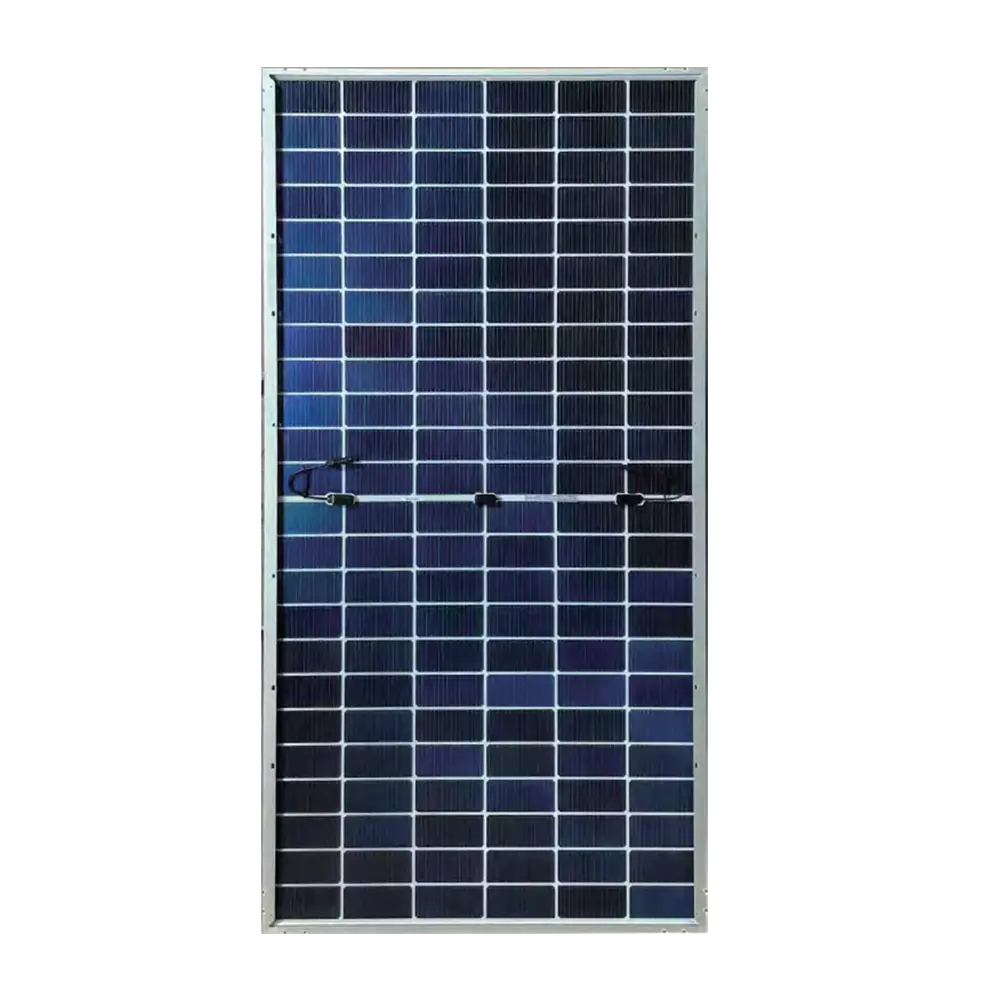
Monocrystalline solar panels use single-crystal silicon wafers with purity levels over 99.9999%, created via the Czochralski process. This process involves melting ultra-pure polysilicon at 1,414°C and gradually pulling out a single cylindrical ingot, which is then cut into wafers 180-200 micrometers thick. The consistent crystal lattice structure reduces electron resistance, allowing for better charge carrier mobility than polycrystalline options.
Modern mono panels predominantly incorporate Passivated Emitter and Rear Cell (PERC) or Tunnel Oxide Passivated Contact (TOPCon) architectures. PERC technology adds a dielectric passivation layer on the cell’s rear surface, reflecting unabsorbed photons through the silicon substrate for secondary capture. This enhancement increases cell efficiency by 1-1.5 percentage points absolute. TOPCon cells feature ultra-thin silicon oxide tunneling layers combined with polysilicon contacts, achieving efficiency gains of 1.5-2 percentage points over standard PERC while demonstrating lower temperature coefficients and reduced light-induced degradation (LID).
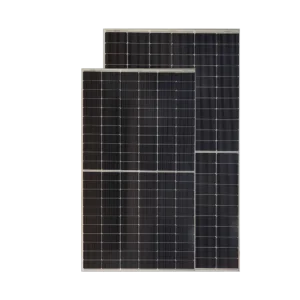
The black appearance is characteristic and results from anti-reflective silicon nitride coatings applied via plasma-enhanced chemical vapor deposition (PECVD). These coatings optimize light absorption across the 300-1,200 nm wavelength spectrum. Commercial-grade mono panels typically feature 60-cell (residential) or 72-cell (commercial) configurations. Recent half-cut cell designs reduce resistive losses by 25-30% through shortened current pathways.
Performance Characteristics Under Standard Test Conditions
Contemporary monocrystalline panels have efficiency ratings ranging from 20% to 23% under Standard Test Conditions (STC: 1,000 W/m², 25°C cell temperature, AM 1.5 spectrum). Premium TOPCon modules produced by Tier 1 manufacturers reach efficiencies between 22.8% and 23.5%, resulting in power outputs of 400 to 450W in 72-cell formats.
This efficiency benefit is especially important on space-limited commercial rooftops, where increasing energy density per square meter directly influences project feasibility. Temperature coefficient performance—measured at -0.35% to -0.38%/°C for power output—determines real-world energy production in elevated ambient conditions.
For industrial installations in tropical or desert climates where module operating temperatures reach 65-75°C, this specification drives annual yield calculations. A -0.35%/°C coefficient results in approximately 12-14% power reduction at 70°C operating temperature compared to STC ratings. Low-irradiance performance sets mono technology apart in areas with frequent cloud cover or during morning and evening generation times.
When irradiance is at 200 W/m², high-quality monocrystalline cells retain 92-95% of their STC efficiency, whereas polycrystalline options achieve only 85-88%. This feature broadens daily generation periods by 30-45 minutes at dawn and dusk, resulting in an extra 3-5% of annual energy production in temperate maritime climates.
Bifacial Solar Panel Technology Explained
Dual-Side Energy Capture Mechanism
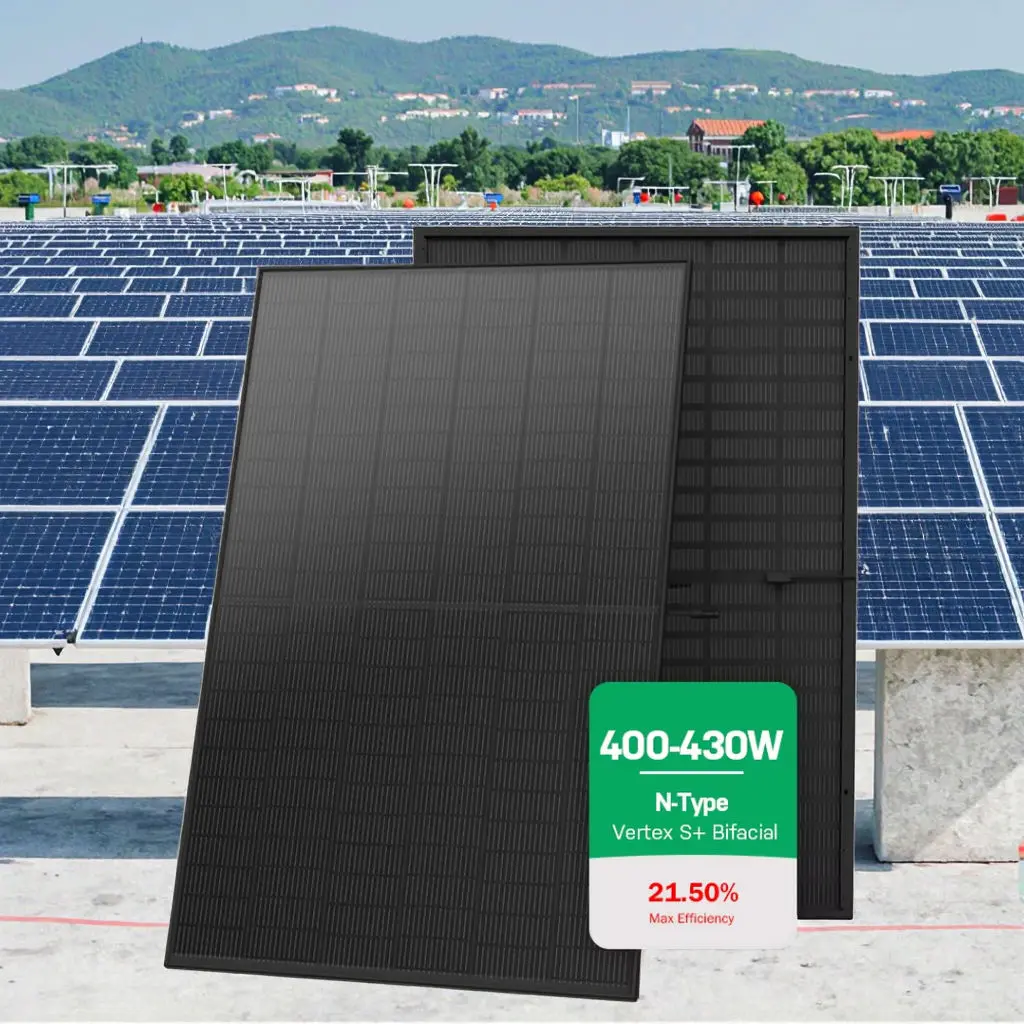
Bifacial solar panels have photovoltaic cells with active front and rear surfaces. They capture direct solar radiation on the front and collect reflected and diffused light from the ground and nearby structures through the rear. The bifaciality factor, which is the ratio of rear-side efficiency to front-side efficiency, varies from 70% to 90% depending on cell design and module construction.
Glass-glass encapsulation is the primary design for bifacial modules, substituting traditional polymer backsheets with an additional tempered glass layer (2.0-2.5mm thick). This design allows light to pass through to the rear cells while offering excellent moisture barrier capabilities (water vapor transmission rate <0.1 g/m²/day) and improved mechanical strength. The dual-glass configuration adds 2-3 kg to the module’s weight compared to glass-backsheet versions, necessitating structural engineering considerations for rooftop installations.
Albedo effect optimization enhances rear-side energy capture, with ground reflectivity coefficients ranging from 0.15 (dark soil) to 0.85 (fresh snow). Standard concrete surfaces have albedo values between 0.25 and 0.35, whereas specialized white reflective membranes reach 0.65 to 0.75. Field studies show that increasing ground albedo from 0.20 to 0.60 raises bifacial gain from 8% to 18% in fixed-tilt ground-mount configurations.
N-type monocrystalline cells dominate bifacial applications because of their inherent benefits: minimal light-induced degradation (<1% in the first year compared to 2-3% for p-type), excellent performance at high temperatures, and the best spectral response on the rear side. Using n-type TOPCon or Heterojunction with Intrinsic Thin layer (HJT) cells in a bifacial design results in modules rated between 380-430W (72-cell), with front-side efficiency surpassing 21.5%.
Installation Requirements for Optimal Performance
Bifacial panel optimization requires minimum ground clearance specifications between 0.8 and 1.5 meters, with performance studies indicating 15-20% bifacial gain improvement when increasing height from 0.5m to 1.2m. This elevation allows reflected light to reach rear cells while minimizing shading from mounting structures. Single-axis tracking systems maximize bifacial advantage by maintaining optimal incident angles throughout the day, achieving 25-35% total energy gain compared to fixed-tilt mono installations.
The choice of mounting system significantly affects bifacial performance. Using traditional aluminum rails that cause 30-40% shading on the rear side decreases potential bifacial gain by 8-12 percentage points. Mounting solutions that are transparent or involve minimal contact, such as steel cables or perforated structures, restrict shading to 10-15%, maintaining rear-side energy production. Structural engineers need to consider the higher wind loads on dual-glass modules, which typically have design ratings of 2,400 Pa for positive pressure and 4,000 Pa for negative pressure.
Preparing the ground surface is a decision point that involves weighing costs and benefits. White gravel, with an albedo of 0.45-0.55, costs between $8 and $12 per square meter installed and provides an additional 6-9% bifacial gain compared to natural soil. ROI calculations need to balance the capital expenditure on ground treatment with the energy yield improvements over 25 years, usually resulting in a payback period of 4-7 years for utility-scale installations over 10 MW capacity.
Inverter compatibility demands careful consideration of module electrical characteristics. Bifacial panels produce asymmetric I-V curves when rear-side irradiance varies, requiring MPPT algorithms tailored for bifacial performance. String inverters that have independent MPPT channels for every 10-12 modules help avoid mismatch losses in setups with differing ground reflectivity.
Head-to-Head Performance Comparison
Energy Yield Analysis
Comprehensive energy modeling reveals deployment-specific performance differentials between mono and bifacial technologies. Fixed-tilt ground-mount systems in temperate climates demonstrate bifacial energy gains of 8-15% compared to equivalent mono panels, primarily during morning and evening hours when low solar angles maximize ground reflection capture. Single-axis tracking installations amplify this advantage to 18-25%, with peak bifacial contribution occurring during shoulder seasons when sun elevation angles optimize rear-side irradiance geometry.
Seasonal performance variations favor bifacial technology in snow-prone regions. Winter albedo coefficients of 0.70-0.85 from snow cover generate rear-side irradiance exceeding 300 W/m², producing bifacial gains of 25-30% during December-February periods. This seasonal boost partially compensates for reduced daylight hours, narrowing the winter production deficit compared to summer baseline generation.
Commercial rooftop applications present nuanced comparisons. White TPO or PVC membrane roofing (albedo 0.60-0.70) enables 12-18% bifacial gains in optimally elevated installations. However, flush-mounted or low-tilt configurations (<15° tilt) limit rear-side exposure, reducing bifacial advantage to 5-8%. Space constraints often favor high-efficiency mono panels when maximizing installed capacity within available roof area takes precedence over per-watt energy yield optimization.
Performance Comparison Matrix
| Parameter | Mono PERC | Mono TOPCon | Bifacial n-Type |
|---|---|---|---|
| Efficiency (%) | 20.5-21.5 | 22.0-23.5 | 21.5-22.5 (front) |
| Power Output (W, 72-cell) | 380-410 | 410-450 | 400-430 + bifacial gain |
| Temperature Coefficient (%/°C) | -0.37 | -0.33 | -0.29 |
| Annual Degradation (%) | 0.55 | 0.45 | 0.40 |
| Warranty Period (years) | 25 (linear) | 25-30 (linear) | 30 (linear) |
| Price per Watt (USD) | $0.18-0.22 | $0.22-0.26 | $0.24-0.30 |
Real-World Application Scenarios
Utility-scale ground-mount projects (>50 MW) achieve optimal bifacial ROI through economies of scale in ground preparation and specialized mounting systems. Projects in high-albedo environments—desert regions with light-colored sand, industrial sites with concrete hardstands—demonstrate LCOE reductions of $0.008-0.015/kWh compared to mono alternatives when accounting for 20-year energy production differentials.
Rooftop commercial installations favor mono panels in scenarios prioritizing maximum installed capacity. A 500 kW rooftop system using 450W mono modules requires 1,112 panels versus 1,176 panels for 425W bifacial equivalents, translating to 5-8% additional racking, wiring, and labor costs. When roof space limits system size below utility demand, the higher mono panel wattage delivers superior economic outcomes despite lower per-watt energy yield.
Carport and elevated canopy structures represent ideal bifacial deployment scenarios. The inherent elevation (2.5-3.5m clearance) and reflective surfaces (vehicle roofs, concrete parking surfaces) naturally optimize bifacial performance without additional ground treatment costs. Field data from commercial parking installations shows 15-22% energy gains over mono alternatives, with accelerated ROI timelines of 6-8 years versus 7-9 years for equivalent mono systems.
Cost-Benefit Analysis for B2B Procurement
Initial Investment vs. Lifetime ROI
Capital expenditure analysis shows that bifacial modules typically carry a 10-15% price premium over comparable mono PERC panels, with current market prices ranging from $0.24 to $0.30 per watt, compared to $0.18 to $0.22 per watt. Nonetheless, LCOE calculations that include 25-year energy yield forecasts indicate that bifacial technology can be economically comparable or even advantageous in optimized installations. For example, a 10 MW ground-mounted project with a 15% bifacial gain results in an LCOE of $0.032 to $0.038 per kWh, versus $0.035 to $0.041 per kWh for mono options, based on total installed costs between $0.90 and $1.10 per watt.
Payback period variations by geography reflect regional solar resource quality and electricity pricing structures. Regions with high insolation (>2,000 kWh/m²/year) and high commercial electricity rates ($0.12-0.18/kWh) see bifacial systems pay back within 5-7 years, compared to 6-8 years for mono systems. Temperate maritime climates with moderate insolation (1,400-1,700 kWh/m²/year) lengthen payback periods by 12-18 months, reducing the economic benefits of bifacial technology.
Financial modeling needs to consider differences in degradation rates. Mono PERC panels usually ensure 84.8% of their original power after 25 years, with an annual degradation rate of 0.55%. Bifacial n-type modules typically maintain 87.4% retention, with a 0.40% annual degradation. Over a 25-year project duration, this 2.6 percentage point difference results in an extra 65-85 MWh of generation per MW of installed capacity, worth between $6,500 and $12,750 depending on electricity prices.
Maintenance and Operational Considerations
Cleaning frequency critically impacts bifacial performance economics. Rear-side soiling from ground-level dust accumulation reduces bifacial gain by 3-7 percentage points in arid climates, necessitating cleaning intervals of 60-90 days versus 90-120 days for front-side-only mono panels. Automated cleaning systems add $0.08-0.12/W CAPEX but reduce operational cleaning costs from $15-20/MW/cleaning to $8-12/MW/cleaning through labor elimination.
Structural load requirements for bifacial glass-glass modules increase foundation and racking costs by 5-8% due to 15-20% weight increases. Engineering specifications must accommodate 22-24 kg/m² module weight versus 18-20 kg/m² for glass-backsheet mono panels. Ground-screw foundations in suitable soils mitigate cost increases to 3-5% through faster installation compared to concrete pier alternatives.
Inverter compatibility and system design optimization influence O&M costs. Bifacial installations require enhanced monitoring systems tracking front and rear-side irradiance, adding $5,000-8,000 per MW for meteorological stations and rear-side sensors. This investment enables performance ratio validation and warranty claim substantiation, but increases initial system commissioning complexity.
Compliance and Quality Standards
International Certification Requirements
IEC 61215 and IEC 61730 standards establish baseline safety and performance requirements for all crystalline silicon modules, including 200 thermal cycles, 50 humidity-freeze cycles, and 1,000-hour damp heat exposure. Bifacial modules additionally comply with IEC TS 60904-1-2, specifying rear-side power measurement protocols under controlled irradiance conditions. This technical specification standardizes bifacial rating methodologies, enabling accurate performance comparisons across manufacturers.
UL 61730 listing (North America) and CE marking (European Union) represent mandatory market access requirements. Third-party testing laboratories verify electrical safety, fire classification (Class C minimum for most commercial applications), and mechanical load resistance. Premium manufacturers pursue voluntary certifications, including Salt Mist (IEC 61701) for coastal installations and Ammonia Corrosion (IEC 62716) for agricultural environments, demonstrating extended durability in harsh conditions.
Quality assurance protocols differentiate Tier 1 manufacturers through enhanced testing regimes. Extended thermal cycling (400+ cycles), higher mechanical load testing (5,400 Pa), and accelerated UV exposure (twice IEC requirements) identify potential field failure modes before market release. B2B procurement specifications should mandate factory inspection reports, component traceability documentation, and third-party quality audits for projects exceeding 5 MW capacity.
Performance Warranties and Guarantees
Linear power output warranties establish manufacturer confidence in long-term degradation rates. Standard mono PERC warranties guarantee 97% retained power at year 1, declining linearly to 84.8% at year 25. Premium mono TOPCon and bifacial n-type products extend warranties to 30 years with 87.4-88.6% end-of-life retention, reflecting superior degradation resistance. Product warranties covering manufacturing defects span 12-15 years for mono panels and 15-20 years for bifacial modules, correlating with expected component lifespan differentials.
Manufacturer tier rankings—assessed by Bloomberg New Energy Finance (BNEF)—influence insurance premiums and project bankability. Tier 1 manufacturers demonstrate three criteria: vertical integration, automated production lines exceeding 1 GW annual capacity, and five-year operational history. Projects utilizing Tier 1 modules secure insurance rates 15-25 basis points lower than Tier 2/3 alternatives, translating to $25,000-40,000 savings per 10 MW project over 25-year coverage periods.
Insurance implications extend to performance guarantees and business interruption coverage. Bifacial installations require specialized policies addressing rear-side performance validation and albedo maintenance obligations. Insurers increasingly demand independent engineer (IE) reports validating bifacial gain assumptions during project financing, adding $8,000-15,000 due diligence costs but ensuring realistic production forecasts for debt service coverage calculations.
FAQ Module
1. What is the actual energy gain of bifacial panels in commercial rooftop installations?
Commercial rooftop bifacial gains range from 5-18% depending on mounting configuration and roof surface reflectivity. Flush-mounted systems on dark membrane roofing achieve minimal gains (5-7%), while elevated installations (0.4-0.8m clearance) on white TPO membranes deliver 12-18% improvements. Cost-benefit analysis must account for additional racking expenses ($0.08-0.12/W) required for optimal elevation, with ROI achieved within 7-10 years in favorable conditions. Rooftop space constraints often favor high-wattage mono panels when maximizing capacity within limited areas.
2. Do monocrystalline panels perform better in high-temperature industrial environments?
Mono TOPCon panels demonstrate superior high-temperature performance with temperature coefficients of -0.29% to -0.33%/°C compared to -0.35% to -0.38%/°C for standard PERC technology. In industrial environments where module operating temperatures reach 70-75°C (ambient 40°C + solar heating), TOPCon modules retain 88-90% of rated power versus 85-87% for PERC alternatives. This 3-4 percentage point advantage translates to 75-100 kWh additional annual generation per kW installed in tropical or desert industrial facilities, justifying the 15-20% price premium through enhanced lifetime energy yield.
3. How does shading affect mono vs. bifacial panel performance differently?
Partial shading impacts bifacial panels more severely due to rear-side generation dependency on reflected light. Front-side shading of 10-15% from mounting structures reduces total bifacial output by 12-18% when combined with rear-side obstruction, compared to 10-15% loss for mono panels with optimized bypass diode configurations. However, bifacial panels demonstrate an advantage in inter-row shading scenarios common in ground-mount arrays, where reflected light from adjacent row gaps contributes 3-5% additional generation. String inverter selection with module-level MPPT or DC optimizers mitigates shading losses to 8-12% for both technologies, adding $0.06-0.10/W system cost.
Conclusion
Panel technology selection demands a thorough analysis of site-specific conditions, financial goals, and operational limitations instead of simple cost-per-watt comparisons. Monocrystalline panels offer proven reliability and cost-effectiveness for rooftop commercial setups where space limitations emphasize maximum power density and flush-mounting designs reduce bifacial benefits. The mature supply chain, simplified installation procedures, and competitive pricing ($0.18-0.22/W) make mono panels the standard option for distributed generation projects under 2 MW capacity.
Bifacial technology delivers a superior lifetime ROI in ground-mount utility projects exceeding 10 MW, where economies of scale support the use of specialized mounting systems and ground surface optimization. Energy gains of 18-25% in tracking configurations and increased durability from glass-glass construction lead to LCOE reductions of $0.008-0.015/kWh, despite capital cost premiums of 10-15%. Project developers should focus on deploying bifacial systems in high-albedo environments—such as desert regions, snow-prone areas, and industrial hardstands—where rear-side generation potential surpasses 12% of annual contribution.
Decision frameworks need to account for long-term degradation differences, warranty policies, and insurance considerations beyond initial procurement costs. The annual degradation rate of 0.40-0.45% for bifacial n-type modules compared to 0.55% for mono PERC technology results in an extra 65-85 MWh of energy generation per MW over 25 years, adding an incremental value of $6,500-12,750. B2B buyers should require independent energy yield assessments, verification of manufacturer tier, and detailed O&M cost modeling to ensure technology choices meet project-specific IRR and payback criteria.