
Abstract:
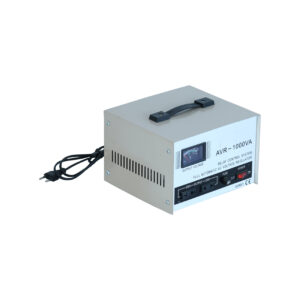
A voltage regulator is a basic electronic component that is designed to maintain a consistent output voltage despite different input voltages, conditions of use, and environmental factors.
According to the classic electronics book Microelectronic Circuits by Sedra and Smith, voltage regulation is crucial to safeguarding delicate electronic components and ensuring consistent performance of the system.
From simple linear controllers employed in consumer electronics to complex switching controllers employed in industrial power systems, voltage controllers serve as the foundation of modern electrical and electronic design.
This article provides a comprehensive, industry-oriented description of the function of a voltage regulator, its mechanism, its importance, and the different types of regulators that are employed to fulfill specific technical and commercial goals.
Understanding the Core Function of a Voltage Regulator
At its most basic, the purpose of a voltage regulator is to ensure that an electrical system receives a consistent, powerful voltage regardless of the input power or demand changes. In the real world, voltage levels are typically not consistent. Power sources like batteries have a limited capacity to store energy, the AC power source is subject to surges and drops, and the load changes dynamically based on the condition of the operating system.
A voltage controller functions as a mechanism for controlling the power source and the load. It monitors the voltage output continuously and automatically adjusts the internal parameters to make any difference from the intended level. Without a voltage controller, even small changes in supply voltage would lead to problems, reduced efficiency, data corruption, or permanent damage to electronic components.
In modern electronics, where microprocessors, sensors, and communication components are operated within narrow ranges of voltage, voltage regulation is not considered an option—it’s instead a necessity for the reliability and safety of the system as a whole.
Why Voltage Regulation Is Critical in Electronic Systems?
Electronic components are intended to function within specific voltage ranges. Exceeding the limits will lead to an increase in current, overheating, or a dielectric failure, while a lack of voltage will lead to erratic operation or system failure. The voltage controller functions as a protective barrier that shields downstream components from varying power levels.
Beyond safety, voltage regulation has a direct impact on performance consistency. For instance, in digital circuits, voltage changes can lead to timing issues, logic errors, and signal corruption. In analog systems, voltage fluctuations can lead to noise, distortion, and misreadings.
From a commercial perspective, poor voltage regulation is often associated with increased failure rates, more frequent warranty requests, and lower customer satisfaction. As such, voltage regulators have a significant role in both technical design and quality control, as well as brand reputation.
Basic Operating Principle of a Voltage Regulator
Despite the variety of voltage regulators, their basic operating principle is similar to a feedback-based concept. An inherently steady voltage is contrasted with the actual output voltage. Any discrepancy between the two will lead to a signal that the regulator uses to alter its internal components and return to the intended level of output.
This continuous-loop process is often very rapid, which allows the regulator to respond to transients like sudden increases in load or voltage spikes. The efficacy of a voltage regulator is dependent on its capacity to perceive voltage changes accurately and how it addresses them.
Types of Voltage Regulators and Their Functional Differences
Voltage regulators are typically divided into two categories: internal and external. The latter is used for voltage control. Each type has the same basic function of voltage regulation, but they do it in different ways, which makes them appropriate for different purposes.
- Linear Voltage Regulators
Linear voltage controllers regulate the output voltage by dissipating the excess voltage that is input, which is done as heat. They operate in a continual conduction mode, altering the sequence of pass elements in order to regulate the voltage.
| Feature | Linear Voltage Regulator |
| Efficiency | Low to moderate |
| Output noise | Very low |
| Circuit complexity | Simple |
| Typical use | Low-power, noise-sensitive applications |
The primary benefit of linear controllers is their ease of use and low noise production. This causes them to be ideal for analog electronics, audio components, and precise measurement instruments that have a high degree of signal purity as a priority.
However, their effectiveness decreases significantly when the difference between the input and output voltage is large; this is why their use is primarily limited to low-power applications.
- Changing the Voltage Regulator
Voltage regulators that switch between different voltage levels are used to regulate the output voltage. These components are energy storage devices that are rapidly switched on and off. Instead of releasing energy in the form of heat, they transfer it more efficiently through cycles that are controlled by the user.
| Feature | Switching Voltage Regulator |
| Efficiency | High (often >85%) |
| Output noise | Higher than linear |
| Circuit complexity | Higher |
| Typical use | Power supplies, industrial systems |
Switching regulators are widely used in applications where power efficiency is critical, such as battery-powered devices, data centers, and renewable energy systems. Their ability to step voltage up or down with minimal energy loss makes them indispensable in modern power electronics.
Key Functions of a Voltage Regulator in Practical Applications
While voltage regulation is the primary goal, voltage controllers perform several additional functions that are of great importance in real-world systems.
- Load Regulation
Load regulation is the capacity of the regulator to maintain a consistent voltage when the load changes. In devices that frequently switch on and off, such as industrial controllers or consumer electronics, load regulation is employed to ensure that the devices operate smoothly without having to dip or spike voltage.
- Line Regulation
Line regulation is concerned with the degree to which a voltage regulator is able to regulate the input voltage. This function is of great importance in areas with power grid instability or in systems that are powered by generators and alternative sources.
- Sound Suppression
Voltage regulators also function as noise reductionists; they reduce the noise and ripples from the power source. Clean power is crucial to sensitive electronics like medical equipment, communication devices, and precision instruments.
Voltage Regulators in Consumer Electronics
In consumer electronics, voltage controllers are common, but typically not recognized by the end consumer. Smartphones, laptops, TVs, and gaming consoles all have multiple voltage regulators that supply different components with precise voltage levels.
For instance, a smartphone’s battery may have a voltage that is between 3.0 V and 4.2 V, but the processor, memory, display, and radio components all require a consistent voltage. Voltage regulators allow this complexity to be maintained by converting a single, variable power source into multiple consistent power rails.
Industrial and Automotive Applications of Voltage Regulators
In industrial settings, voltage controllers must be able to withstand harsh conditions, including temperature changes, electrical noise, and mechanical stress. Programmable logic controllers (PLCs), electric motors, and monitoring systems all require precise voltage regulation to maintain accuracy and longevity.
Other challenges associated with automotive systems are present. Voltage controllers in cars must have a wide range of input voltage, frequent changes, and stringent safety standards. Modern vehicles have multiple voltage controllers that support the control of the engine, information, sensors, and ADAS.
Voltage Regulators in Renewable Energy and Power Systems
Alternative energy sources, like solar and wind, are dependent on voltage control. Solar panels and windmills have a variety of outputs that are dependent on the environmental conditions; thus, regulation is necessary to ensure the safety and efficiency of the energy conversion.
In these arrangements, voltage regulators facilitate the stabilization of the DC voltage of the bus, protect inverters, and ensure a consistent power supply to the grid or storage system. Their function is to extend past electronics into a broader energy management and system dependability.
How to Choose the Right Voltage Regulator?
Selecting the appropriate voltage regulator requires careful consideration of application requirements, operating conditions, and economic factors.
| Selection Factor | Why It Matters |
| Input voltage range | Ensures compatibility with the power source |
| Output current | Determines load capability |
| Efficiency | Impacts heat and energy consumption |
| Thermal performance | Affects reliability |
| Noise tolerance | Critical for sensitive circuits |
A poor regulator choice can compromise system performance, increase costs, or shorten product lifespan.
Common Failure Modes and Design Considerations
Despite their significance, voltage controllers are not impervious to failure. Overheating, misaligned components, insufficient filtering, and poor PCB design can all adversely affect the performance of the regulator.
Designers must take into consideration the management of thermal energy, protection against transient conditions, and the proper aterrissage of the device in order to ensure its dependability. In industries with high reliability, multiple regulations and monitors are often employed to reduce risk.
Frequently Asked Questions (FAQ)
Q1: What is the main function of a voltage regulator?
The primary function of a voltage regulator is to maintain a constant output voltage despite changes in input voltage or load conditions.
Q2: Why are voltage regulators important in electronic devices?
They protect sensitive components, ensure stable operation, and improve system reliability and lifespan.
Q3: What is the difference between linear and switching voltage regulators?
Linear regulators are simpler and quieter but less efficient, while switching regulators are more efficient but generate more electrical noise.
Q4: Can a voltage regulator improve energy efficiency?
Yes, especially switching voltage regulators, which minimize energy loss and reduce heat generation.
Q5: Are voltage regulators used in high-power systems?
Yes, voltage regulators are essential in industrial, automotive, and renewable energy systems where power stability is critical.
Conclusion
The purpose of a voltage regulator is much more extensive than simply regulating voltage. It’s the foundation of modern electronics, which enables stability, efficiency, safety, and scalability in numerous applications.
As electronic systems evolve into more complex systems and require more performance, voltage regulators will still be important components that consistently ensure everything is functioning as intended.