
Einführung
In regions where summer temperatures frequently exceed 35°C, a common concern is how N-type solar panels perform under intense heat.
Solar panels are rated under standard test conditions at 25°C, but on rooftops they can easily reach 65–75°C or higher. At these temperatures, efficiency drops noticeably with every degree of rise. Thanks to phosphorus-doped silicon wafers, N-type panels suffer significantly less performance loss in high heat. Here’s what the real-world data shows.
What makes N-type solar panels different?
N-type panels handle heat better because of a fundamental difference in cell technology. Traditional P-type cells are doped with boron to create positive charge carriers, while N-type cells use phosphorus to create negative charge carriers. This change may sound minor, but it delivers major advantages — especially in high-temperature conditions.
The key differences at the material level include:
-
Dopant material: N-type uses phosphorus; P-type uses boron
-
Charge carrier: N-type has negative (electron); P-type has positive (hole)
-
Boron-oxygen defects: None in N-type; present in P-type, causing LID
-
Electron mobility: N-type is much higher (1,350 vs 480 cm²/V·s)
The key advantage of N-type solar panels lies in their resistance to light-induced degradation (LID) and light- and elevated-temperature-induced degradation (LeTID). P-type panels are susceptible to boron-oxygen complexes that form when the panel is first exposed to sunlight, causing a significant drop in efficiency. N-type solar panels do not suffer from this defect, which means they maintain their rated output from day one.
This inherent stability is what makes N-type solar panels particularly well-suited for hot climates where high temperatures and intense sunlight go hand in hand.
Temperature coefficient: the number that matters
When evaluating how N-type solar panels perform under high temperatures, the single most important metric is the temperature coefficient of power (Pmax). This number tells you how much power the panel loses for every degree Celsius above 25°C.
Here is a comparison of typical temperature coefficients across technologies:
| Technology | Temperature Coefficient (Pmax) |
|---|---|
| N-type TOPCon (flagship) | -0.26% per °C |
| N-type TOPCon (standard) | -0.29% per °C |
| P-type PERC | -0.32% to -0.35% per °C |
| Traditional P-type | -0.35% to -0.40% per °C |
The gap between N-type and P-type is typically 0.04% to 0.08% per °C. What do these numbers mean in practice? Consider an N-type solar panel with a temperature coefficient of -0.29% per °C and a P-type panel at -0.35% per °C. At a panel operating temperature of 65°C—a 40°C rise above STC—the N-type solar panel loses about 11.6% of its rated power. The P-type panel loses about 14%.
That 2.4% difference may not sound like much, but over the lifetime of a solar installation, it adds up to thousands of kilowatt-hours of lost production. For commercial installations covering hundreds or thousands of panels, the financial impact is substantial.
How much power do N-type solar panels lose in the heat?
Let us put some real numbers on this. At an operating temperature of 65°C:
-
N-type solar panels (TOPCon): approximately 12% power loss
-
P-type solar panels (PERC): approximately 14% to 18% power loss
At 75°C—a 50°C rise above STC—the gap widens further. A standard N-type solar panel with a -0.29% coefficient loses about 14.5% of its rated power. A flagship N-type panel with a superior -0.26% coefficient loses roughly 13%. By comparison, a P-type panel with a -0.35% coefficient at the same 75°C operating temperature would lose about 17.5% of its rated power.
Here is another way to look at it. In one direct comparison, N-type modules demonstrated a 1.5% to 2% higher energy yield than P-type modules in high-temperature environments when accounting for both temperature coefficient and actual operating temperature.
But here is the key insight: N-type solar panels not only lose less power per degree, but they also tend to operate at lower actual temperatures. Thanks to their higher efficiency—24% for JUTA’s N-type panels—more of the sunlight is converted to electricity, and less is wasted as heat. Some N-type bifacial modules, when combined with reasonable installation gaps and airflow channels, can reduce operating temperature by 5-8°C—which is equivalent to reducing power loss by 1.5-2.4%.
Independent research has confirmed that N-type modules have an average operating temperature about 1°C lower than P-type modules under the same conditions. Advanced TOPCon designs can achieve operating temperature reductions of 1–1.5°C compared to conventional modules, further reducing thermal stress and long-term degradation.
Component operating temperatures: what the data shows
Understanding actual operating temperatures helps put the performance numbers in context. For a rooftop flush-mount installation, typical panel temperatures range from 60-70°C with peaks of 75-85°C. Elevated ground mounts run cooler at 50-60°C typical and 65-75°C peak. Bifacial modules with good airflow can stay even cooler, around 48-58°C typical.
In hot climates, rooftop temperatures can easily exceed 80°C during peak afternoon hours. For a 10kW system, P-type panels can lose over 0.5kW per hour during peak summer heat, while N-type solar panels maintain output far more stably. Over a single hot afternoon, that is 2-3 kWh of lost production—and over an entire summer, the cumulative losses are substantial.
Degradation: the long-term advantage of N-type
High temperatures do not just reduce instantaneous power output—they also accelerate long-term degradation. This is another area where N-type solar panels have a clear advantage.
Independent testing by TÜV NORD revealed striking differences in LeTID performance. After 192 hours of LeTID testing:
-
N-type solar panel degradation: 0.09%
-
P-type solar panel degradation: 1.17%
That is more than a tenfold difference. The boron-oxygen defects that plague P-type panels are activated by heat and light, causing progressive power loss. N-type solar panels, free from this defect, simply do not suffer the same fate.
Here are the key degradation comparisons in a single table:
| Degradation Type | N-type Solar Panels | P-type Solar Panels |
|---|---|---|
| LID (first-year) | 0.26% | 1.92% |
| LeTID (192 hrs) | 0.09% | 1.17% |
| Annual degradation | ~0.40% | ~0.50% |
| 30-year output advantage | +2.6% | Baseline |
The first-year degradation figures tell a similar story. P-type panels typically lose 1.5% to 2% in their first year due to LID. N-type solar panels lose as little as 0.26%. Over a 30-year lifespan, this translates into a cumulative energy advantage of about 2.6% for N-type solar panels.
N-type vs P-type: a complete performance summary
Beyond temperature coefficient and degradation, N-type panels outperform P-type in several other areas:
-
Efficiency: N-type reaches 22-25.5%, while P-type PERC is typically 21-23%.
-
Bifaciality: N-type TOPCon achieves 80-90%, compared to ~70% for P-type PERC.
-
Operating temperature: N-type runs 1-1.5°C cooler, reducing thermal stress.
-
Weak-light performance: N-type maintains higher efficiency at low irradiance (<600 W/m²).
These combined advantages mean that in real-world hot climates, N-type modules consistently generate 1.5% to 5.3% more annual energy than P-type modules, with the largest gains occurring during the hottest months.
Field test data from Hainan: real-world validation
The theoretical advantages of N-type solar panels are confirmed by real-world field tests. In a year-long energy yield test conducted in Hainan, China—a hot and humid tropical environment—researchers compared N-type and P-type modules under identical conditions.
Key findings from the Hainan field test:
-
Average daily energy yield: N-type modules achieved 4.32 kWh/kW, compared to 4.20 kWh/kW for P-type modules
-
Annual generation gain: N-type modules outperformed P-type by approximately 2.9%
-
High-temperature advantage: the gain was most pronounced during hot summer months when module operating temperatures were highest
-
Weak light performance: N-type modules also demonstrated better performance under low-light conditions, extending the productive hours each day
Another independent study found that N-type TOPCon photovoltaic modules generated 5.15% more annual energy than P-type PERC modules across all months of the year. This substantial gain is attributed to the combination of better temperature coefficients, lower operating temperatures, and superior weak-light performance.
Additional field data from operational plants in hot climates confirms that N-type modules consistently deliver 1.5% to 5.3% higher energy yield than P-type modules, with the largest gains occurring during the hottest months.
Bifacial gain: an additional advantage
Many N-type solar panels are available in bifacial configurations, which capture light from both the front and rear sides. This adds another layer of performance advantage in hot climates.
N-type TOPCon modules achieve bifaciality rates of approximately 80%, compared to about 70% for P-type PERC modules. This 10% difference in bifaciality means that N-type bifacial panels generate more energy from the rear side.
How bifacial gain contributes to overall performance:
-
Rear-side generation can add 5-25% additional energy depending on ground reflectivity and mounting height
-
Lower operating temperature – bifacial modules mounted with elevated racks run cooler than flush-mounted monofacial panels
-
Better low-light response – N-type cells capture more light in early morning and late afternoon, extending the productive window
In hot climates, the combination of superior temperature coefficient and higher bifaciality makes N-type solar panels an even more compelling choice.
Weak light performance: a hidden benefit
High-temperature days often bring hazy skies or cloud cover that reduces irradiance. N-type solar panels excel in these conditions as well.
N-type modules maintain higher efficiency at low irradiance levels—below 600 W/m²—compared to P-type panels. This means:
-
Early morning and late afternoon production is higher
-
Cloudy days generate more energy
-
Total daily yield increases, not just peak output
In the Hainan field test, this weak-light advantage contributed to the overall 2.9% annual generation gain. For grid-tied systems, this means more energy when prices may be higher (during evening peaks) and better overall utilization.
The role of TOPCon technology
Most modern N-type solar panels utilize TOPCon (Tunnel Oxide Passivated Contact) technology. This advanced cell architecture builds on the inherent advantages of N-type silicon with additional performance enhancements.
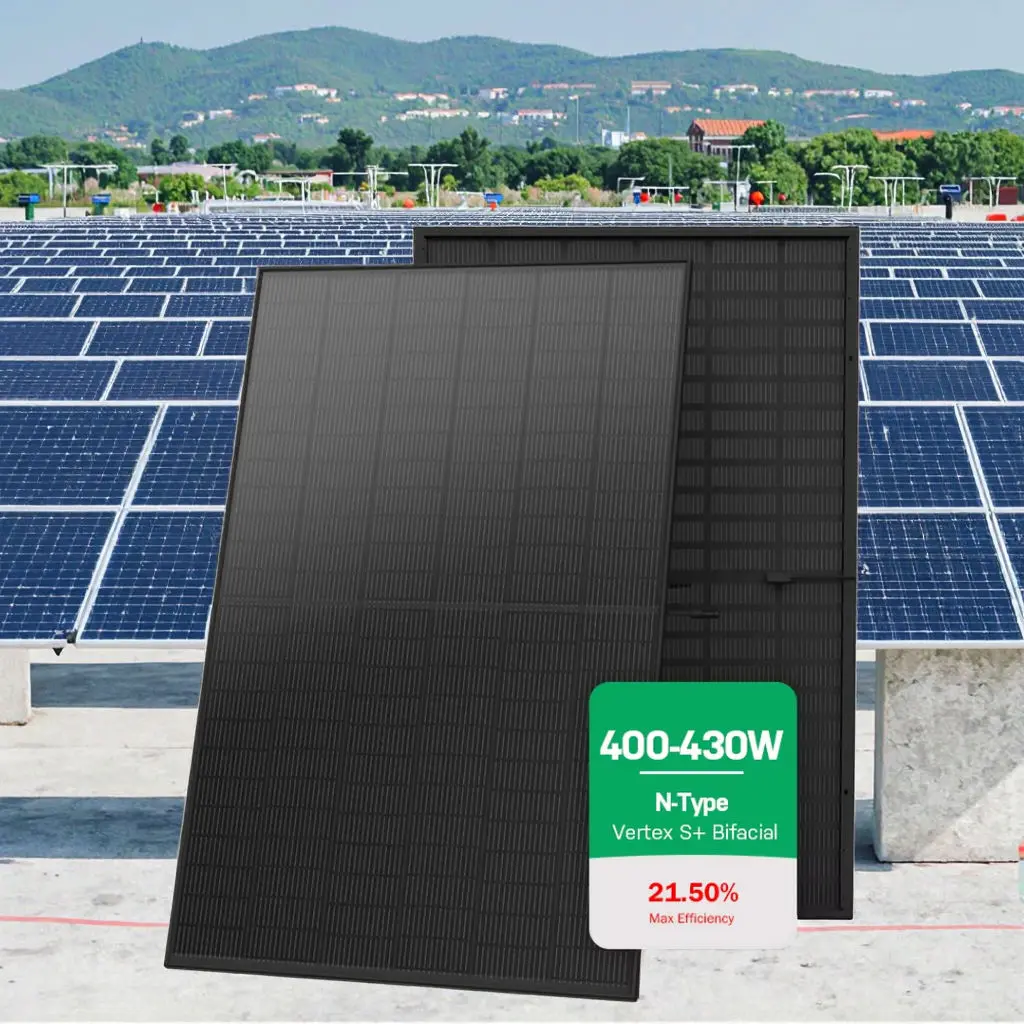
TOPCon technology achieves efficiencies of 24% and higher—the product page for JUTA’s N-type solar panels specifically highlights 24% panel efficiency. This high conversion efficiency means more electricity from the same surface area and, critically, less heat generation per watt produced. Key specifications of JUTA’s N-type panels include:
-
Power output: 400W (range: 400W-450W)
-
Cell size: 182mm × 182mm
-
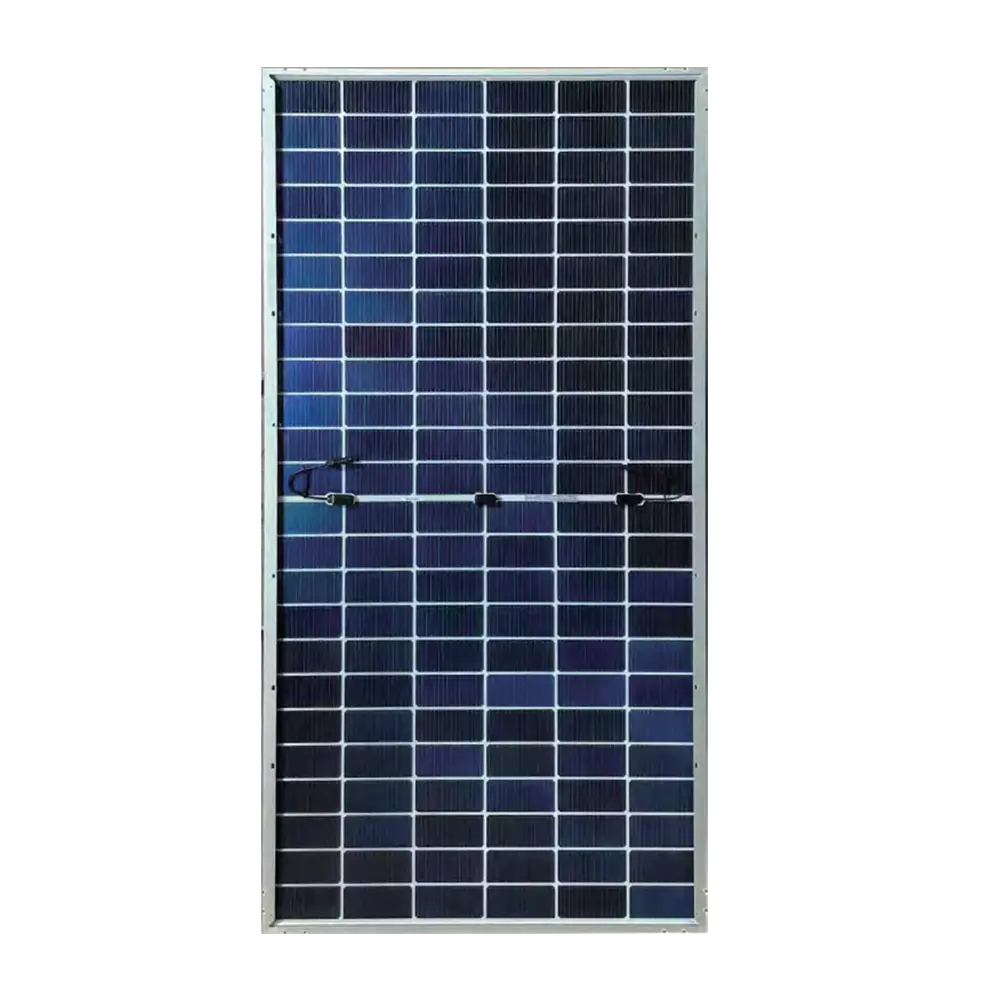
Panel dimensions: 1722 × 1134 × 30mm
-
Cell count: 108 cells (6×9×2)
-
Frame: Anodized aluminum alloy
-
Junction box: IP67 rated
-
Front glass: 3.2mm high-transmission
The temperature coefficient of TOPCon N-type solar panels has been steadily improving. Industry data shows the median TOPCon Pmax temperature coefficient improved from -0.30% to -0.29% per °C over the past three years, with leading products achieving -0.26% per °C.
This matters because every 0.01% improvement in the temperature coefficient translates into measurable annual production gains in hot climates. Using a generic -0.37% coefficient instead of the actual -0.29% for an N-type solar panel can underestimate annual production by 2-4% in warm regions.
How N-type panels achieve better temperature performance
Multiple factors contribute to the superior high-temperature performance of N-type solar panels:
-
No boron-oxygen defects – N-type silicon is doped with phosphorus, not boron, eliminating LID
-
Higher minority carrier lifetime – N-type silicon has a significantly longer carrier lifetime than P-type silicon
-
Better surface passivation – TOPCon technology provides superior passivation, reducing recombination losses
-
Higher open-circuit voltage – N-type TOPCon cells achieve up to 742mV, translating to better high-temperature performance
-
Reduced LeTID sensitivity – N-type cells inherently degrade less under combined heat and light
These factors work together to ensure that N-type solar panels maintain stable output even when temperatures soar.
Practical considerations for installation
To get the most from your N-type solar panels in hot climates, consider these best practices:
Maintain adequate airflow. Install panels with a 10-15 cm air gap between the panels and the roof surface. Allow airflow to carry away heat from the back of the panels. This can significantly reduce operating temperatures.
Choose bifacial where appropriate. Bifacial N-type solar panels can capture reflected light from the ground or roof surface. Bifaciality rates of 80-90% are achievable with N-type TOPCon. The additional generation from the rear side can offset any heat-related losses.
Consider the mounting structure. Elevated mounting systems allow air to circulate freely underneath the panels. Flush-mounted systems run hotter and should be avoided in hot climates.
Monitor performance. Use a monitoring system to track actual output versus expected output. This will help you verify that your N-type solar panels are delivering the promised high-temperature performance.
Optimize string design. Consider the temperature coefficient when designing string lengths. In hot climates, voltage drops are less severe with N-type panels due to their better temperature coefficients.
Keep modules clean. Dust and soiling reduce efficiency and can increase operating temperatures. Regular cleaning—especially in desert and dry climates—maximizes output.
The financial case for N-type in hot climates
The technical advantages of N-type solar panels translate directly into financial benefits:
Higher energy yield. With 1.5-5.3% higher annual energy production in hot climates, N-type panels generate more revenue or savings over their lifetime.
Lower degradation. With first-year degradation of just 0.26% versus 1.92% for P-type, N-type panels retain more of their capacity over time.
Longer useful life. The cumulative effect of lower degradation and better high-temperature tolerance means N-type panels can outlast P-type panels in hot climates.
Better ROI. Despite a higher upfront cost, the additional energy production and longer life make N-type solar panels a superior investment in hot climates.
Here is a simplified financial comparison for a 10kW system in a hot climate:
| Metric | N-type System | P-type System |
|---|---|---|
| Annual production (Year 1) | ~16,500 kWh | ~15,500 kWh |
| Production advantage | ~1,000 kWh/year | Baseline |
| 25-year total production | ~390,000 kWh | ~360,000 kWh |
| Additional revenue (25 yrs) | ~$3,000+ | Baseline |
Climate zone performance comparison
How do N-type solar panels perform across different climate zones? Here is a summary:
-
Hot desert (Arizona, Middle East): 3-5% higher yield due to superior temperature coefficient and lower operating temperature
-
Humid tropical (Southeast Asia, Florida): 2.5-4% higher yield from better LeTID resistance and weak-light performance
-
Temperate (Europe, Northeast US): 1-2% higher yield from moderate temperature and strong weak-light benefit
-
Cold (Canada, Northern Europe): 0.5-1% higher yield, with bifacial gain still helping
The advantage of N-type solar panels is most pronounced in hot climates, but they deliver measurable benefits even in cooler regions.
The future of N-type technology
The market share of N-type solar panels is growing rapidly. In 2024, N-type accounted for roughly 8-12% of global solar panel shipments, but this is projected to reach 40-50% by 2028. The reasons are clear:
-
Higher efficiency – 24%+ is now standard for N-type, while P-type PERC is plateauing around 22-23%
-
Better temperature performance – the gap in temperature coefficients is widening as N-type technology improves
-
Lower degradation – longer warranties (up to 30 years) are becoming common for N-type products
-
Bifacial compatibility – N-type is better suited for bifacial designs, which are increasingly popular
As manufacturing costs continue to decline, N-type solar panels will become the new industry standard, leaving P-type as the budget alternative.
Schlussfolgerung
N-type solar panels perform significantly better under high temperatures than P-type modules. They have lower temperature coefficients and much slower degradation rates, which means they lose less power when it gets hot and maintain higher output over time.
At 65°C, an N-type panel typically loses only about 12% of its rated power, compared to 14-18% for a typical P-type panel. After 192 hours of LeTID stress testing, N-type degradation is just 0.09%, versus 1.17% for P-type. Over 30 years, this translates into roughly 2.6% more energy production, with real-world results showing up to 5.3% higher energy yield.
For projects in hot climates, the extra upfront cost of N-type technology is usually offset by stronger long-term performance and reliability. Whether for residential rooftops, commercial buildings, or utility-scale farms, these panels deliver better efficiency and heat tolerance where it matters most.
Contact our team to discuss your project requirements. We’ll help you select the right N-type solar panels for your climate, budget, and energy goals.