
Introduction
Solar panels can generate significant electricity during daylight hours, but without energy storage, much of that power cannot be used when solar production stops. A home solar energy storage system solves this challenge by storing excess solar energy for nighttime use, cloudy conditions, or backup power needs.
As residential solar adoption continues to grow, selecting the right energy storage solution has become increasingly important for homeowners, installers, and distributors. Factors such as battery capacity, system scalability, inverter compatibility, safety features, and long-term reliability all affect overall performance.
This guide explains the key considerations when choosing a home solar energy storage system and helps buyers evaluate the right solution for different residential energy requirements.
What types of home solar energy storage systems are available?
Not all home energy storage systems are built the same way. Understanding the configurations helps narrow the field.
| System Type | Configuration | Best For | Key Advantage | Key Limitation |
|---|---|---|---|---|
| All-in-One System | Battery + inverter + BMS in one unit | New installations, limited space | Simplified installation, single warranty | Less flexibility for upgrades |
| Modular Stackable System | Stackable battery modules with a separate inverter | Growing energy needs, scalability | Add capacity as needed, future-proof | Requires more planning |
| AC-Coupled System | The battery connects to the AC side of the existing solar | Retrofitting existing solar | Works with any solar inverter | Lower efficiency (DC-AC-DC conversion) |
| DC-Coupled System | The battery connects to the DC side before the inverter | New systems, higher efficiency | Fewer conversion losses | Requires a hybrid inverter |
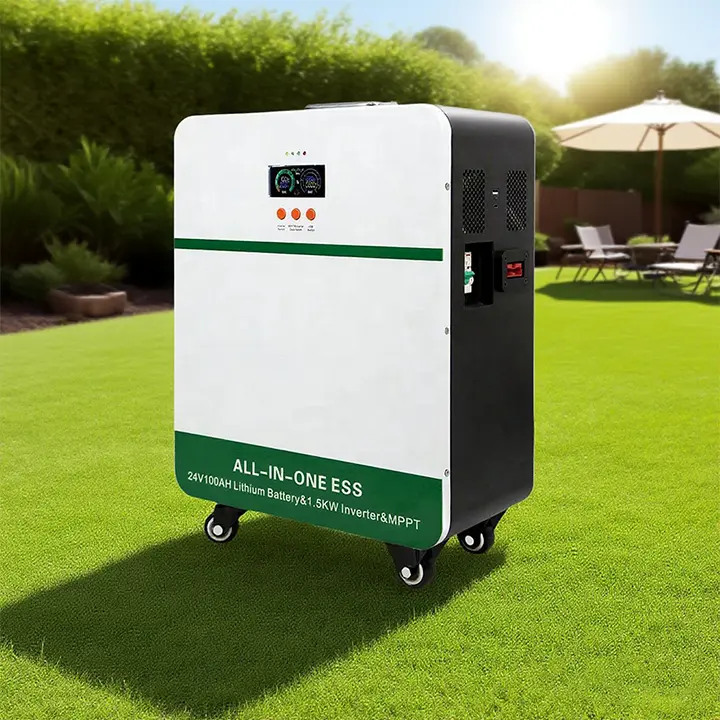
The all-in-one approach has gained traction because it simplifies installation and warranty management. A system that combines the battery pack, inverter, and BMS in a single enclosure reduces compatibility concerns.
But the stackable approach offers something the all-in-one cannot: scalability. A stackable lithium battery system lets you start with a single 5kWh unit and add more as your household energy needs grow. This modular design—supporting up to six modules and 30kWh capacity—means you are not locked into today’s energy consumption patterns. As electric vehicles enter the household or as family size changes, the system expands with you.
For procurement managers sourcing home solar energy storage systems for distribution or installation networks, the stackable configuration offers a compelling value proposition: one product platform serves customers at different stages of their energy journey.
Why Does Battery Chemistry Matter in a Home Solar Energy Storage System?
The battery is the core component of any home solar energy storage system. It directly affects the system’s safety, usable capacity, service life, and long-term operating cost. For residential applications, Lithium Iron Phosphate (LiFePO4) has become the preferred battery chemistry due to its balance of safety, durability, and performance.
LiFePO4: A Reliable Choice for Residential Energy Storage
Compared with traditional lead-acid batteries, LiFePO4 batteries offer higher usable capacity, longer cycle life, and better stability. They can typically achieve thousands of charge and discharge cycles while maintaining strong performance, making them suitable for daily solar charging and energy consumption scenarios.
For buyers evaluating a solar battery storage solution, cycle life is one of the most important factors to consider. However, the cycle rating should not be viewed separately. A reliable evaluation should also include:
- Depth of discharge (DoD) at the rated cycle life
- Capacity retention after long-term operation
- Battery management system (BMS) performance
- Warranty coverage and service support
A high-quality LiFePO4 home solar energy storage system with an advanced BMS can provide stable operation for many years. With features such as cell balancing, temperature monitoring, and protection against overcharging and over-discharging, the BMS plays a critical role in maintaining battery safety and extending system lifespan.
For installers, distributors, and project buyers, choosing LiFePO4 technology means offering customers a safer, more reliable, and lower-maintenance energy storage solution.
How do you size a home solar energy storage system correctly?
Oversizing wastes money. Undersizing leaves you frustrated. Getting it right requires understanding both your consumption and your goals.
Start with daily consumption.
The first step in sizing any home solar energy storage system is understanding your household’s daily energy usage. Review your utility bills for the past 12 months. Look for the average daily kilowatt-hour (kWh) consumption.
For a typical household, daily consumption might range from 10 to 30 kWh. But usage varies seasonally—air conditioning in summer, heating in winter, holiday gatherings.
Define your backup objectives.
Not every home solar energy storage system needs to power the entire house during an outage. Define what “backup” means for your situation:
-
Essential loads only: Refrigerator, lights, internet, phone charging, medical devices
-
Partial home backup: Essential loads plus selected circuits (well pump, garage door)
-
Whole home backup: Everything, including air conditioning and electric cooking
This decision directly impacts the size of the home solar energy storage system you need. A 5kWh system might cover essential loads for several hours. A 20kWh system could run an entire home overnight.
Consider future needs
Energy consumption rarely decreases over time. New appliances, electric vehicles, home office equipment, and growing families all increase demand.
This is where stackable home solar energy storage systems shine. A modular system lets you start with a single battery unit and add more as your needs evolve. The stackable lithium battery design—supporting up to 30kWh total capacity—provides a growth path that fixed-capacity systems cannot match.
What Role Does the Inverter Play in a Home Solar Energy Storage System?
The inverter is one of the most important components of a home solar energy storage system. It converts DC power generated by solar panels and stored in batteries into usable AC electricity while managing energy flow between solar generation, battery storage, and household loads.
For residential applications, hybrid inverters have become a preferred choice because they combine solar power conversion and battery management in a single system, simplifying installation and improving overall system compatibility.
Why Choose a Hybrid Inverter with MPPT?
A hybrid inverter allows homeowners and installers to manage solar generation, battery charging, and power consumption more efficiently. By integrating multiple functions into one device, it reduces system complexity and provides greater flexibility for different installation scenarios.
MPPT (Maximum Power Point Tracking) technology is an essential feature in modern solar inverters. It helps optimize solar input performance by adjusting to changing conditions such as sunlight intensity, panel orientation, and partial shading.
When selecting an inverter for a home solar energy storage system, consider:
- Number of MPPT trackers for different solar panel configurations
- Input voltage range and compatibility with PV modules
- Conversion efficiency and standby power consumption
- Communication options such as CAN, RS485, or Wi-Fi integration
Pure Sine Wave Output and Grid Compatibility
A reliable inverter should provide pure sine wave output to ensure stable operation of sensitive household devices, including computers, appliances, and medical equipment.
Depending on regional requirements, residential energy storage systems may support different operating modes:
- Self-consumption: Prioritize solar energy usage and reduce grid dependence
- Time-of-use: Store energy during low-cost periods and use it during peak pricing hours
- Backup power: Provide electricity during grid outages
For installers, distributors, and international buyers, inverter compatibility with local voltage standards, grid regulations, and communication protocols is essential when selecting a reliable energy storage solution.
What safety and certification standards matter?
Safety is not optional in a home solar energy storage system. Lithium batteries contain significant energy. Poorly designed or manufactured systems pose fire risks.
Essential certifications
When evaluating a home solar energy storage system, verify these certifications:
-
IEC 62109: Safety of power converters for photovoltaic systems
-
IEC 62619: Safety requirements for secondary lithium batteries
-
UL 1973: Standard for batteries for use in stationary applications
-
UN38.3: Transport of lithium batteries
-
CE, RoHS: EU market access
-
MSDS: Material Safety Data Sheet
BMS protection
The Battery Management System (BMS) is the safety watchdog of any home solar energy storage system. It monitors cell voltages, temperatures, and current flow. It prevents overcharge, over-discharge, and thermal runaway.
A robust BMS should include:
-
Cell balancing to ensure all cells charge evenly
-
Temperature monitoring at multiple points
-
Overcurrent and short-circuit protection
-
Communication with the inverter for coordinated operation
IP rating for environmental protection
If the home solar energy storage system is installed outdoors or in unconditioned spaces, the IP rating matters. IP65 provides complete protection against dust and low-pressure water jets from any direction. This is the minimum standard for outdoor installations in most climates.
How does the total cost of ownership compare across home solar energy storage systems?
The purchase price is the number everyone focuses on. It is also the least important number in the long run.
Upfront cost vs. lifetime cost
The installed cost of residential battery storage in Europe fell from approximately €1,500/kWh in 2020 to €800 to €1,100 per kWh in 2026. In the US, solar battery storage costs range from $1,000 to $1,600 per usable kWh installed. A single battery itself is only about half the cost of an installed battery system.
But the upfront price tells only part of the story. Total cost of ownership includes:
-
Purchase price of the home solar energy storage system
-
Installation labor and balance-of-system components
-
Maintenance and service costs over the system lifetime
-
Replacement costs (batteries wear out; inverters may need replacement)
-
Energy savings (or lost savings from poor performance)
-
Incentives and tax credits (which vary by region)
The hidden cost of poor quality
A cheap home solar energy storage system often fails to deliver its rated capacity. It may have a shorter cycle life, a higher degradation rate, or less efficient power conversion. These performance gaps translate to real costs: higher electricity bills, more frequent replacements, and frustrated customers.
Installers have started voting with their wallets. They no longer look only at price per watt-hour when choosing brands. Instead, they evaluate cycle life, degradation curves, warranty terms, and remote diagnostic capabilities as core metrics.
Warranty as a proxy for quality
Warranty terms reveal a lot about a manufacturer’s confidence in its home solar energy storage system. A 5-year warranty is standard. Longer warranties signal higher confidence in cycle life and degradation performance.
But read the fine print. Some warranties cover only the battery cells. Others cover the entire system, including the inverter and BMS. Some warranties are prorated; others are full replacement. The difference matters when you file a claim.
What should you look for in a home solar energy storage system supplier?
For procurement professionals, the supplier matters as much as the product.
Manufacturing quality and certifications
ISO 9001 certification indicates quality management systems are in place. Look for suppliers who can document their manufacturing processes, quality control procedures, and testing protocols.
Factory audits provide additional assurance. Visit the facility if possible. Review production lines, quality control checkpoints, and test equipment. A transparent supplier welcomes these visits.
Communication and monitoring capabilities
Modern home solar energy storage systems should offer remote monitoring and diagnostic capabilities. CAN, RS-232, and RS485 communication ports enable integration with energy management systems and remote troubleshooting.
For installers and distributors, remote diagnostics reduce service calls. They allow technicians to identify issues before they become failures. They enable firmware updates without on-site visits. These capabilities translate to lower operating costs and higher customer satisfaction.
Customization and branding options
Some buyers need white-label or customized home solar energy storage systems. If branding matters, confirm the supplier offers customization options for color, logo placement, and packaging.
After-sales support and spare parts.
A home solar energy storage system is a long-term investment. The supplier should provide:
-
Technical documentation and installation manuals
-
Responsive customer support (ideally 24/7 for international buyers)
-
Spare parts availability for at least 5 to 10 years
-
Training for installation and maintenance teams
References and track record
Ask for references from other commercial buyers. Contact them. Ask about product reliability, supplier responsiveness, and whether the systems met performance expectations. The answers reveal more than any datasheet.
What are the common mistakes when choosing a home solar energy storage system?
Even experienced buyers make errors. Here are the most common pitfalls.
Focusing only on price
The cheapest home solar energy storage system is rarely the best value. Lower price often means lower-grade cells, weaker BMS, shorter cycle life, or minimal support. The savings disappear quickly when the system fails or underperforms.
Ignoring degradation
All batteries degrade. But the rate varies significantly. A high-quality LiFePO4 home solar energy storage system might retain 80% capacity after 6,000 cycles. A lower-quality system might drop to 70% after 3,000 cycles. That difference matters over a 15-year lifespan.
Overlooking installation requirements
A home solar energy storage system is only as good as its installation. Improper mounting, inadequate ventilation, or incorrect wiring can void warranties and create safety hazards. Factor installation costs and requirements into the total cost calculation.
Forgetting about scalability
Energy needs grow. A home solar energy storage system that meets today’s requirements may fall short in five years. Stackable, modular systems provide a growth path that fixed-capacity systems cannot.
Neglecting communication integration
A home solar energy storage system that cannot communicate with the solar inverter, the home energy management system, or the utility grid misses opportunities for optimization. CAN, RS-485, and Wi-Fi connectivity are not optional extras—they are essential for modern energy management.
Making the right choice for your home solar energy storage system
The decision process for a home solar energy storage system should follow a systematic approach:
-
Define your goals. Backup power? Bill reduction? Carbon footprint? Different goals lead to different system designs.
-
Audit your consumption. Understand daily, monthly, and seasonal usage patterns. This data drives sizing decisions.
-
Evaluate your site. Available space, mounting options, orientation, and shading all affect system design.
-
Compare chemistries. LiFePO4 offers the best balance of safety, cycle life, and performance for residential storage.
-
Size appropriately. Balance capacity against cost. Consider future needs and scalability.
-
Verify certifications. IEC, UL, UN38.3, CE—these are not optional.
-
Assess the supplier. Quality, support, warranty, and track record matter as much as the product.
-
Calculate total cost of ownership. Include purchase, installation, maintenance, replacement, and energy savings.
-
Plan for installation. Professional installation protects your investment and ensures warranty coverage.
-
Monitor and maintain. Use remote monitoring to track performance and catch issues early.
A home solar energy storage system is a significant investment. It is also an investment that pays dividends in energy independence, bill reduction, and peace of mind. The key is making informed choices before you buy—not after.
Ready to Source a Reliable Home Solar Energy Storage System?
Choosing the right energy storage partner is essential for installers, distributors, and project developers. We provide stackable LiFePO4 battery systems with hybrid inverters, MPPT technology, and certified safety standards, offering flexible 5kWh–30kWh configurations for different residential energy needs.
Contact our technical team to discuss your project requirements and get a tailored energy storage solution.