
Abstract:
A solar controller, also called a solar charge controller, is essential to photovoltaic (PV) systems because of its role in regulating the flow of power between solar panels and storage devices.
The IEA, the National Renewable Energy Laboratory (NREL), and the IEEE standards on the design of photovoltaic systems all advocate for proper charge regulation in the battery. This regulation is significant in the long term decrease of the battery’s lifespan and overall efficiency. Solar controllers have a significant role in avoiding overcharging, deep discharge, and electrical instability, which prevents the safe, efficient, and long term operation of solar power systems.
This article discusses the industry-average understanding of what a solar controller is, how it functions, its primary functions, types, applications, and selection criteria. By combining the knowledge of leading solar-powered vehicles and the current state of the art in terms of solar power, this guide provides a more extensive and technically informed perspective than previous top-ranked content.
Introduction: Why the Solar Controller Matters in Modern Solar Systems
As the number of solar-powered devices has increased globally, the reliability and efficiency of photovoltaic systems have become paramount to installers, engineers, and consumers. While solar panels are typically the most celebrated component, the solar controller is the component that determines the safety, efficiency, and sustainability of a system over time.
A popular misconception is that solar panels can be connected to batteries or other loads directly. In fact, this can lead to:
- Overcharging the battery
- Early battery failure
- Voltage flutter
- Decreased system lifespan
This is the exact location where the solar controller becomes of great importance.
What Is a Solar Controller?
A solar controller is an electronic component that is installed between solar panels and batteries (or other loads) to regulate voltage and current. Its primary purpose is to ensure that batteries are charged appropriately and with safety, taking into account their chemical composition and capacity.
In professional and technical contexts, solar controllers are also known as:
- Charge controllers that use the sun
- PV power charge controllers
- Charge controllers that charge solar batteries
Regardless of terminology, their function is still the same: regulating energy and protecting it.
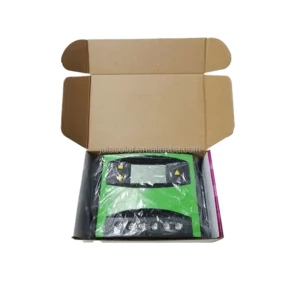
What Does a Solar Controller Do?
From a practical perspective, a solar controller carries out multiple essential functions:
- Avoids the overcharging of the battery
Solar panels have a higher voltage than batteries can safely handle. A solar-powered controller will limit the voltage and current to a minimum, avoiding this:
Overheating
Electrolyte depletion (in lead-acid cells)
Heat-induced runaway (in lithium-based systems)
- Preserves Against Entitlement
Many controllers will disconnect loads when the battery’s voltage is below a pre-detected threshold. This discourages over-discharge, which is one of the most common causes of battery failure.
- Increases the efficiency of Charging
Advanced solar controllers take into account the changing nature of the solar energy source:
- The state of charge of the battery
- Temperature
- Solar input conditions
This optimization increases the efficiency of energy harvesting and extends the life of the battery.
- Provides System Monitoring and Control
Modern solar controllers that are popular include:
- Digitized displays
- Monitoring from a distance
- Data recording
- Communication protocols (RS485, CAN, Bluetooth)
These properties are vital to commercial and industrial installations.
How a Solar Controller Works?
The mechanism by which a solar-powered controller functions is based on continuous voltage and current measurement, plus a real-time combination of these values.
Essential Operating Logic
Solar-powered panels produce direct current electricity.
The controller checks the amount of power the panels produce and the voltage of the battery.
The amount of charge is limited by the battery’s capacity to charge.
The charging process will stop or switch to a different mode once the battery has exceeded the set limit.
This feedback system is closed-loop and ensures the stability of the electrical circuit in the system.
Types of Solar Controllers
Two varieties of solar controllers are primarily employed in the industry.
- PWM (Pulse Width Modulation) Solar Controllers
PWM controllers control the charging process by quickly switching the connection between the panels and the batteries.
Advantages:
- Lower price
- Simplistic design
- Maintained for small installations
Limitations:
- Lower productivity
- Voltage mismatches incur losses
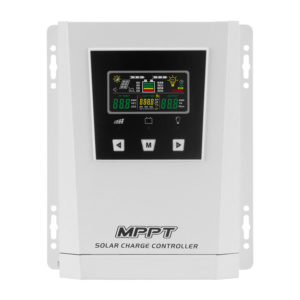
- MPPT ( Maximum Power Point Tracking) Solar Controllers
MPPT controllers utilize complex math to locate the optimal voltage and current level of solar panels, which will maximize the amount of energy transferred.
Advantages:
- 15–30% more effective
- Increased efficiency in adverse or low-lighting conditions.
- Adept at high voltage arrays
Limitations:
- Higher price
- More intricate electronics
Comparison Table: PWM vs MPPT Solar Controllers
| Feature | PWM Solar Controller | MPPT Solar Controller |
| Efficiency | Low–Medium | High |
| Cost | Lower | Higher |
| System size | Small | Medium to large |
| Voltage flexibility | Limited | High |
| Energy harvest | Standard | Optimized |
| Typical applications | RVs, small off-grid | Commercial, industrial, hybrid |
Applications of Solar Controllers
- Alternative solar power systems
In off-grid scenarios, solar power controllers are crucial to powering battery-based energy storage systems.
Remote homes
Telecommunications stations
Agricultural machinery
- Combining the advantages of both storage systems (hybrid systems)
Hybrids employ solar-powered controllers to regulate the storage of energy while interacting with the electric grid.
- RV, marine, and portable solar power plants
Compact solar controllers are employed in environments that have varying sunlight and movement.
- Industrial and Commercial Solar Instances
Large-scale systems are dependent on MPPT controllers that have monitoring and safety features for operational dependability.
Battery Compatibility and Charging Profiles
The significance of the event:
Different battery types—lead-acid, AGM, GEL, lithium-ion, LiFePO4—have different voltage requirements and maximum current capacities. Using the incorrect charging pattern can adversely affect battery life or lead to damage.
How the Solar Controllers Manage It:
Programmable or automatic charging scenarios correspond to the battery type.
The process of charging the battery in three stages (bulk, absorption, and float) maximizes the performance of the battery.
Temperature compensation is employed to ensure that the batteries are charged safely in harsh environments.
Lithium-specific managers avoid overfishing and deep-sea fishing.
Key Takeaway: A controller that is compatible with the solar energy system ensures both safety and efficiency, along with a long lifespan.
Why Solar Controllers Improve System Lifespan?
Primary Benefits:
Avoids overcharging and deep discharge: Preserves the batteries’ life-span, increasing their capacity.
Increases the efficiency of solar-powered devices: MPPT controllers that are optimized for efficiency increase the efficiency of solar-powered devices, ensuring that more energy is captured by the battery.
Reduces the Heat and stress placed on the system components: Effective voltage regulation decreases the wear on both the batteries and the connected devices.
Supports Safety Standards: It safeguards against short circuits, reversed polarity, and overvoltage, which diminishes the risk to the system.
Conclusion: A solar-powered controller that is well-matched to maximize the efficiency of its energy and reduce the lifetime of its battery will lower the long-term cost of replacement and maintenance.
Common Misconceptions About Solar Controllers
| Misconception | Reality |
| “All solar controllers are the same.” | Controllers differ in type (PWM vs MPPT), efficiency, and battery compatibility. |
| “A controller isn’t needed for small systems.” | Even small systems require regulation to prevent battery damage. |
| “MPPT controllers are only for large systems.” | MPPT provides higher efficiency in all sizes, especially under partial shading. |
| “Solar panels alone can protect the battery.” | Panels cannot regulate voltage or prevent overcharging without a controller. |
| “Controllers don’t need monitoring or maintenance.” | Regular monitoring ensures settings match battery type and environmental conditions. |
How to Choose the Right Solar Controller?
A solar charge controller is essential to any solar-powered (PV) system. It controls the voltage and current coming from solar panels to batteries. This ensures the safety of the process, prevents overcharging, and increases the life of the battery. Selecting the appropriate controller is based on the system’s size, battery type, and the requirements of the application.
- Understanding the function of a solar charge controller is crucial
A solar-powered charge controller:
Preserves the batteries from being overcharged or depleted.
Increases the efficiency and reliability of the system.
Increases the life of the battery.
Facilitates the monitoring of the system and the management of the load.
Without a properly designed controller, even impressive solar panels and batteries may lack performance or prematurely fail.
- PWM versus MPPT Controls: The Difference Between the Two
PWM (Pulse Width Modulation) Controllers
Best suited for:
- Small, budget-friendly systems
- Panels and batteries that have the same voltage capacity
Advantages:
- Lower price
- Reliable and simple design
Limitations:
- Lower efficiency in cold or changing conditions
- Less inclined to use panel voltage configurations that are less flexible.
MPPT ( Maximum Power Point Trackers) Controllers
Best suited for:
- Large to medium-sized systems
- Systems that use solar power of high voltage or that are installed in a grid.
Advantages:
- Up to 20-30% more energy-rich
- Increased efficiency in cold environments and under low lighting conditions.
- More diverse options available in panel string configurations
Limitations:
- Higher upfront cost
- More intricate electronics
- Convert the voltage of the Match Controller to the system’s voltage
Ensure the controller is compatible with your battery bank’s voltage, which is typically:
- 12V
- 24V
- 48V
Many modern MPPT controllers will automatically recognize the voltage of the system, but this should always be confirmed during the design of the system.
- Estimate the necessary current rating
The controller’s current ranking must be greater than the maximum short-circuit current (Isc) of the solar array.
Best example:
- The controller has a current rating of at least 1.25 times the total panel’s Isc.
- This safety margin is responsible for the high illumination conditions and system expansion.
- Think about theCompatibility of Battery Type
Different batteries have different charging requirements:
- Lead-acid (liquid, AGM, gel)
- Lithium-ion (LiFePO₄, NMC, etc.)
Select a controller that:
- Maintains the proper acid-base balance of your battery.
- Allow users to set custom parameters for charging.
- Includes compensation for temperature (essential to lead-acid batteries)
- Environmental Conditions and Installation
Select enclosures with aIPs that are appropriate for outdoors or wet environments.
Ensure proper thermal management and ventilation.
Check the operating temperature range for extreme environments.
Extremely harsh conditions necessitate superior components that will have a long lifespan.
- System Monitoring and Communication Abilities
Advanced controllers may have:
- Smart TVs or portable devices
- Monitoring via remote control, Wi-Fi, or RS485.
- Data recording and error detection
These attributes are particularly beneficial for commercial, off-grid, or remote installations.
- Load Control and Protection Abilities
Look for pre-emptive safeguards:
- Voltage and current protection
- Protection against reversed polarity
- Short-circuit prevention
- Control of the output load for DC devices.
Integrated protection diminishes the necessity of external components and reduces the complexity of system design.
- Scaleability and Future Growth
If the system is enlarged, likely:
- Select a controller that is larger than necessary currently.
- Ensure compatibility with other systems that are parallel or networked.
- Ensure the firmware is upgradeable
- Preplanning ahead helps to avoid expensive repairs later on.
- Compliance and certification
Ensure the controller is competent:
- Ce, UL, and IEC certifications
- The safety regulations for grids and batteries.
- Local electrical regulations
Certified products increase the safety of the product, the insurance company’s acceptance of the product, and the project’s approval.
FAQ: Solar Controller
Q1: What is a solar controller used for?
A solar controller regulates charging and discharging to protect batteries and improve system efficiency.
Q2: Is a solar controller necessary for all solar systems?
Yes, any system using batteries requires a solar controller.
Q3: What is the difference between a solar controller and an inverter?
A controller regulates charging; an inverter converts DC to AC.
Q4: Can one solar controller manage multiple panels?
Yes, as long as voltage and current limits are respected.
Q5: How long does a solar controller last?
High-quality controllers typically last 10–15 years.
Conclusion
What is the purpose of a solar controller, and what does it accomplish?
A solar controller is the intelligent manager that safeguards batteries, promotes energy efficiency, and ensures long-term viability in solar-powered systems. While frequently overshadowed by panels and inverters, it’s the component that determines if a solar installation is safe and effective over its entire lifespan.
For any significant solar usage that involves residential, commercial, or industrial, solar energy is not removable. It’s crucial.