
Giriş
Rooftop solar adoption is accelerating rapidly across Europe and North America, driven by rising electricity costs and the demand for energy independence.
Yet one key question still confuses many buyers: do you need a single-phase or three-phase inverter?
For most urban homes with a standard single-phase supply, a single phase hybrid solar inverter is often the most practical option. However, the right choice depends on more than just your switchboard—it also involves your energy usage, future load demands, and local grid limits.
This guide breaks down the key factors to help you decide whether a single phase hybrid solar inverter is the right fit for your system.
What Exactly Is a Single Phase Hybrid Solar Inverter and How Does It Work?
The Hybrid Advantage Over Traditional Inverters
To understand a single phase hybrid solar inverter, it helps to start with a standard grid-tied system. In a basic setup, the inverter simply converts DC power from solar panels into AC electricity for household use, with any excess exported to the grid. When the sun goes down, you draw electricity back from the grid.
It works, but the system is limited to one direction of energy flow.
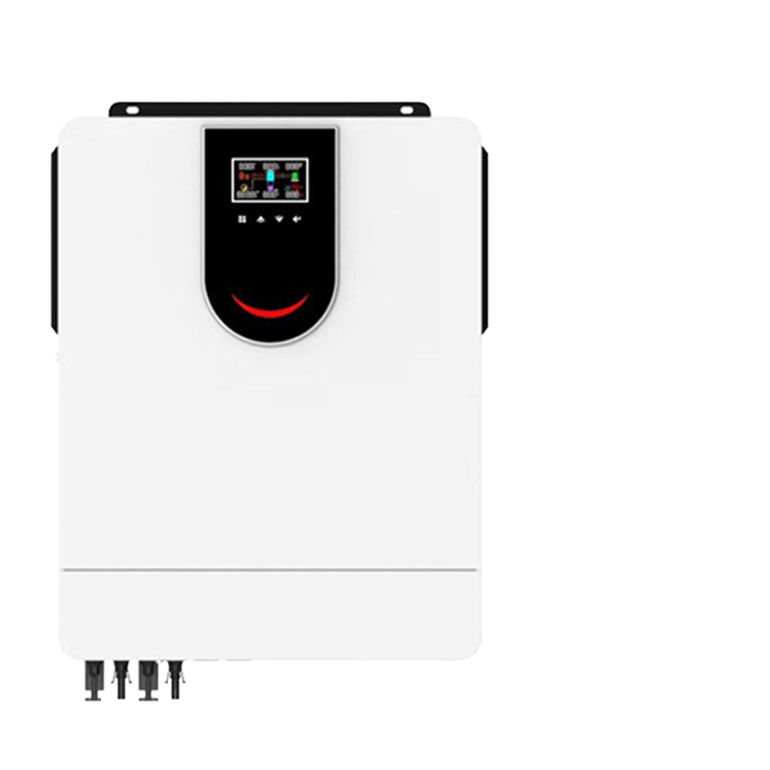
A single phase hybrid solar inverter changes that setup by combining multiple functions in one unit. It integrates a solar inverter, a battery charger, and a battery inverter, allowing energy to move more flexibly between your panels, battery storage, and home.
In practice, this means it can:
- Power your home directly from solar
- Store excess energy in a battery
- Supply electricity from the battery when solar is unavailable
This makes the system far more adaptable to changing energy use throughout the day.
The Basics of Single-Phase Power
Single-phase supply refers to the standard residential electricity setup, using one live wire and one neutral wire to deliver alternating current. In most regions, this operates around 220–240V, while in North America, it is typically 120V in split-phase systems.
A single phase hybrid solar inverter is designed to match this waveform precisely. By synchronising its output with the grid, it ensures smooth and safe power export without causing instability in the local network.
The Role of MPPT Technology
Most modern systems rely on Maximum Power Point Tracking (MPPT) to improve solar efficiency. Instead of drawing a fixed amount of power, the inverter constantly adjusts its operating point to extract the highest possible output from the panels.
A single phase hybrid solar inverter with dual MPPT inputs can manage different panel orientations, such as east- and west-facing arrays. This helps balance generation across the day rather than peaking at a single time, improving overall system efficiency.
How Do You Know If Your Home Actually Needs a Single Phase Hybrid Solar Inverter?
The Simple Switchboard Check
Determining your phase type requires no electrician. Open your main switchboard. Look for the main circuit breaker.
-
If it is a single, narrow switch (usually about 18mm wide), your home is single-phase. You are the prime candidate for a single phase hybrid solar inverter.
-
If it is a wide, triple-width switch (about 54mm wide), you have three-phase power. While you can technically install a single-phase inverter, you will only power one of your three phases, leading to severe imbalances that grid authorities generally prohibit.
Navigating the Capacity Ceiling
Here is where it gets technical. To prevent local transformers from being overloaded, Distribution Network Operators (DNOs) enforce strict capacity limits for single-phase connections. In the UK, the soft limit is 3.68 kW per phase (the G98 standard). In Germany, it is 4.6 kVA. In Australia, most DNSPs cap single-phase solar at 5 kW.
If you install a 6 kW single phase hybrid solar inverter on a property with a 5 kW cap, the grid will curtail your export to 5 kW, essentially wasting the extra 1 kW of generation potential. This makes choosing the right capacity (like the 4–6 kW range) critical. For most average households consuming 8–12 kWh per day, a 5 kW single phase hybrid solar inverter perfectly aligns with both consumption patterns and regulatory limits.
Future-Proofing Your Household
Before committing, ask yourself: “What will my home look like in five years?” If you are installing an induction cooktop, a ducted reverse-cycle air conditioner, or a 7 kW EV charger, single-phase power might struggle to cope with the instantaneous peak load. In such cases, a single phase hybrid solar inverter may bottleneck your electrical capacity, necessitating expensive load-shedding devices or, worse, a costly mains upgrade to three-phase.
Why Choose a Single Phase Hybrid Over a Standard Grid-Tie Inverter?
The Backup Power Security Net
Let’s be honest: the grid is not always reliable. Storms, bushfires, and ageing infrastructure cause outages that can last for hours or days. A standard grid-tie inverter is legally required to shut down during an outage to prevent backfeeding (a safety measure for utility workers). A single phase hybrid solar inverter paired with a battery, however, isolates itself from the grid. Within 10 milliseconds, it switches to a backup mode, powering your designated critical load circuits. This transition is fast enough to keep refrigerators running, lights on, and Wi-Fi routers active, all while your neighbours sit in the dark.
Maximising Self-Consumption and Bill Reduction
Exporting solar energy to the grid yields pennies on the dollar in most countries, while buying it back at night costs a premium. The genius of a single phase hybrid solar inverter is its ability to store your daytime surplus for evening use. In Australia, for instance, feed-in tariffs have dropped to as low as $0.05 AUD/kWh, while retail rates are $0.30 AUD/kWh. By shifting just 10 kWh of consumption per day to self-generated solar via a single phase hybrid solar inverter, the typical homeowner saves over $900 AUD annually. That is a return on investment you simply cannot achieve with a standard grid-tie unit.
Built-in Energy Management Intelligence
Hybrid inverters are intelligent. They monitor household consumption in real-time and dynamically adjust battery charging and discharging based on Time-of-Use (TOU) tariffs. For example, a single phase hybrid solar inverter can be programmed to charge the battery from the grid during cheap off-peak hours (e.g., 2 AM) and discharge it during peak evening hours (e.g., 6 PM), effectively arbitrage the electricity market to slash your bills further. This smart scheduling is seamless and fully automated.
Comparing the Total Cost of Ownership
While a hybrid inverter costs 15%–25% more upfront than a standard grid-tie inverter, it eliminates the need for a separate battery inverter later. If you plan to add storage within the next five years, buying a single phase hybrid solar inverter today saves you the labour, rewiring, and hardware costs of swapping out your entire system down the road. The lifecycle cost is substantially lower.
When Is a Single Phase Hybrid Solar Inverter NOT the Best Choice?
-
The Three-Phase Compatibility Headache
If your property already has three-phase power, installing a single-phase inverter causes a “phase imbalance.” Imagine three pumps drawing water from one reservoir. If only one pump (phase) is pushing water back into the reservoir while the other two pull from it, the reservoir’s pressure gets lopsided. This imbalance can trip your inverter’s anti-islanding protection or even damage sensitive three-phase motors, like those in swimming pool pumps. Some grid authorities strictly refuse to connect a single-phase inverter to a three-phase supply. In this scenario, a single phase hybrid solar inverter is the wrong tool for the job—you need a three-phase hybrid inverter.
-
High-Demand Residential Applications
If your future includes an induction cooktop, a 22 kW three-phase EV charger, and a massive ducted air conditioner, your peak draw could exceed 15–20 kW. A single phase hybrid solar inverter typically tops out around 6–8 kW in output. You would be forced to supplement with grid power constantly, severely undermining your energy independence.
-
The Commercial vs. Residential Distinction
Are you running a home-based workshop with heavy machinery? Welders, large compressors, and lathes often require three-phase power for torque and efficiency. Installing a single phase hybrid solar inverter in such a setting would not only be inefficient but also dangerous, as the inverter would struggle to handle the inductive startup currents. Stick to three-phase industrial solutions for these scenarios.
What Technical Specifications Should You Scrutinise Before Buying?
Real-World Efficiency Ratings
Efficiency is not just a marketing number. Look for the “European Efficiency” rating, which weights performance at different load levels (5%, 10%, 20%, 50%, and 100%). A top-tier single phase hybrid solar inverter achieves a peak efficiency of 97.5% to 98.1%. Over a 25-year lifespan, a 0.5% efficiency gap can translate to over 2,000 kWh of lost generation—equivalent to hundreds of dollars in wasted potential.
Transfer Time and Battery Compatibility
For backup functionality, the transfer time is vital. Anything under 20 milliseconds is practically unnoticeable to electronics. Additionally, ensure the inverter supports Lithium-ion batteries (like LiFePO4) and Lead-acid options (AGM/Gel). Most modern single phase hybrid solar inverters offer CAN/RS485 communication protocols to communicate intelligently with BMS (Battery Management Systems), which prevents overcharging and extends battery cycle life—often from 4,000 to 6,000 cycles.
Cooling and Noise Levels
High power density creates heat. Check whether the inverter uses natural convection cooling (fanless) or forced air cooling (fans). Fanless units are silent, making them ideal for indoor installations near living areas, but they require more clearance space. Forced air units are more compact but may emit 40–50 dB of noise. A well-designed single phase hybrid solar inverter will have over-temperature protection that derates output power if the internal temperature exceeds 45°C, ensuring safety even in harsh summer conditions.
Display and Remote Monitoring
LCDs (like those featured on the 4kW-24V models) provide instant visibility into solar yield, battery State of Charge (SoC), and grid import/export status. However, the real power lies in Wi-Fi or GPRS monitoring apps. You should be able to view your system’s performance on your smartphone from anywhere in the world. This data is invaluable for troubleshooting and ensuring your single phase hybrid solar inverter is performing as expected daily.
Comprehensive Protection Features
Safety certifications are non-negotiable. At a minimum, your inverter must include:
-
Anti-islanding protection (EN 50549 or IEEE 1547 compliant).
-
Over-voltage and under-voltage protection.
-
Over-frequency and under-frequency protection.
-
Surge protection (Type II SPD recommended).
-
IP rating: IP21 for indoor wall-mounting; IP65 if mounted outdoors.
Single Phase Hybrid vs. Standard vs. Three-Phase Solutions
| Özellik | Single Phase Hybrid | Standard Grid-Tie | Three-Phase Hybrid |
|---|---|---|---|
| Ideal Use Case | Standard suburban homes | Homes without battery plans | Large homes, farms, businesses |
| Maximum Output | 4–6 kW (typical) | 3–6 kW | 10 kW+ |
| Battery Integration | Built-in (Yes) | Requires a separate inverter | Built-in (Yes) |
| Backup Power | Yes (10ms transfer) | Hayır | Yes (10ms transfer) |
| Phase Balancing | N/A | N/A | Balances all 3 phases perfectly |
| Tipik Verimlilik | 97.5% – 98.1% | 97.0% – 98.5% | 97.5% – 98.2% |
| Price Range | Orta | Düşük | High (+30–40% premium) |
| Smart TOU Scheduling | Evet | Sınırlı | Evet |
| Installation Complexity | Orta düzeyde | Basit | High (requires 4-wire connection) |
Real-World Scenarios: Which Inverter Wins?
Scenario 1: The Urban Professional
James lives in a two-bedroom flat in London with a standard single-phase supply. His annual consumption is around 4,000 kWh, and his roof has a clean south-facing orientation. With no plans for an electric vehicle, his energy demand is relatively stable, but his export tariff is low.
In this case, a 4 kW single phase hybrid solar inverter paired with a 5 kWh battery offers a well-balanced setup. It allows him to store excess daytime solar and use it during the evening, significantly reducing reliance on the grid and cutting overall consumption by up to 70%.
Scenario 2: The EV Enthusiast
Priya lives in Sydney and has recently purchased a Tesla Model Y. Although her home has single-phase power, her planned 6.6 kW solar system runs into local grid limitations, with her DNSP capping single-phase export at 5 kW.
Her installer explains that using a 6 kW single phase hybrid solar inverter would not unlock additional usable capacity—instead, the system would be curtailed at the grid limit. To avoid wasted potential and support higher future loads, she upgrades to a three-phase system with a corresponding inverter better suited for EV charging and higher household demand.
Scenario 3: The Prepper
Carlos lives in rural Texas, where power outages are a regular concern. His home runs on single-phase supply, and his priority is reliability rather than system complexity.
A robust single phase hybrid solar inverter combined with a 10 kWh LiFePO4 battery gives him stable backup power for essential loads like lighting, refrigeration, and a water pump. With generator input support, he can also recharge the system during extended cloudy periods, ensuring continuous operation even off-grid.
Scenario 4: The Budget-Conscious Starter
Mia has just purchased her first home and wants to move into solar without committing to a battery immediately. Instead of installing a standard grid-tie system, she chooses a single phase hybrid solar inverter to keep future options open.
This decision allows her to start with solar-only operation and add battery storage later without replacing core equipment. When she eventually upgrades, integration is seamless, saving her additional installation and rewiring costs while improving long-term system flexibility.
Installation, Maintenance, and Total Cost Considerations
Professional Installation Is Key
While DIY electronics are tempting, a single phase hybrid solar inverter handles lethal DC and AC voltages. Wiring it incorrectly can lead to fire hazards and void your warranty. Certified installers perform impedance testing on the grid connection, ensuring the inverter’s anti-islanding settings match the local grid standard (e.g., G98/G99 for the UK, VDE-AR-N 4105 for Germany). They also ensure that the critical load sub-panel is correctly wired so that your backup sockets are genuinely isolated during an outage.
Maintenance and Longevity
Maintenance is surprisingly low. For a single phase hybrid solar inverter, the main longevity factor is thermal stress. Clean the heatsink fins and ensure the fan (if equipped) is free from dust annually. Most hybrid inverters come with a standard 5-year warranty, but premium manufacturers often extend this to 10 or 12 years. The internal DC-DC converters and IGBT modules are solid-state, meaning there are no moving parts, so the expected operational life is 10–15 years before capacitor degradation affects performance.
Cost-Benefit Analysis (Upfront vs. Lifetime)
While a premium single phase hybrid solar inverter may cost $1,200–$1,800 compared to $900 for a grid-tie, the ability to utilise TOU tariffs and provide backup power adds tangible economic value. If you save just $150 per year through intelligent battery scheduling, the additional cost is recouped within 2–3 years. Over a 10-year period, that is over $1,500 in net savings, investing a no-brainer for homeowners with peak/off-peak rate differentials.
Conclusion: Making the Final Call for Your Grid-Tie System
So, is a single phase hybrid solar inverter the right choice for grid-tied homes? For most households on single-phase supply, the answer is yes. It brings together solar conversion, battery readiness, and backup capability in one system, making it a practical option for reducing electricity bills and improving energy resilience as storage costs continue to fall.
That said, it isn’t a universal solution. Homes with three-phase supply, higher peak loads, or long-term high energy demand may require a different configuration. The key is matching a single phase hybrid solar inverter to your actual grid limits and future consumption plans rather than oversizing or underestimating your setup.
If you’re unsure whether your home is suitable, it’s worth getting a quick professional check. Our solar specialists can review your switchboard, energy usage, and installation goals, and help you choose the most suitable single phase hybrid solar inverter for a system that performs efficiently and delivers strong long-term value.