
Abstract
With solar project margins under increasing pressure, many developers are discovering that choosing cheaper, lower-wattage modules often leads to higher overall costs. This article provides a detailed TCO analysis of 620W Bifacial Solar Panels, demonstrating how they deliver significant project savings compared to traditional 450W modules.
By reducing module quantity, BOS costs, installation labor, and land requirements while increasing energy yield by 12-15%, 620W bifacial solar panels achieve 8-12% lower LCOE despite a higher upfront module price. Targeted at project developers, EPC contractors, and procurement managers, this analysis reveals when and why upgrading to high-power bifacial technology makes strong financial sense for utility-scale and commercial solar projects.
Understanding 620W Bifacial Solar Panel Technology
Core Technology Architecture
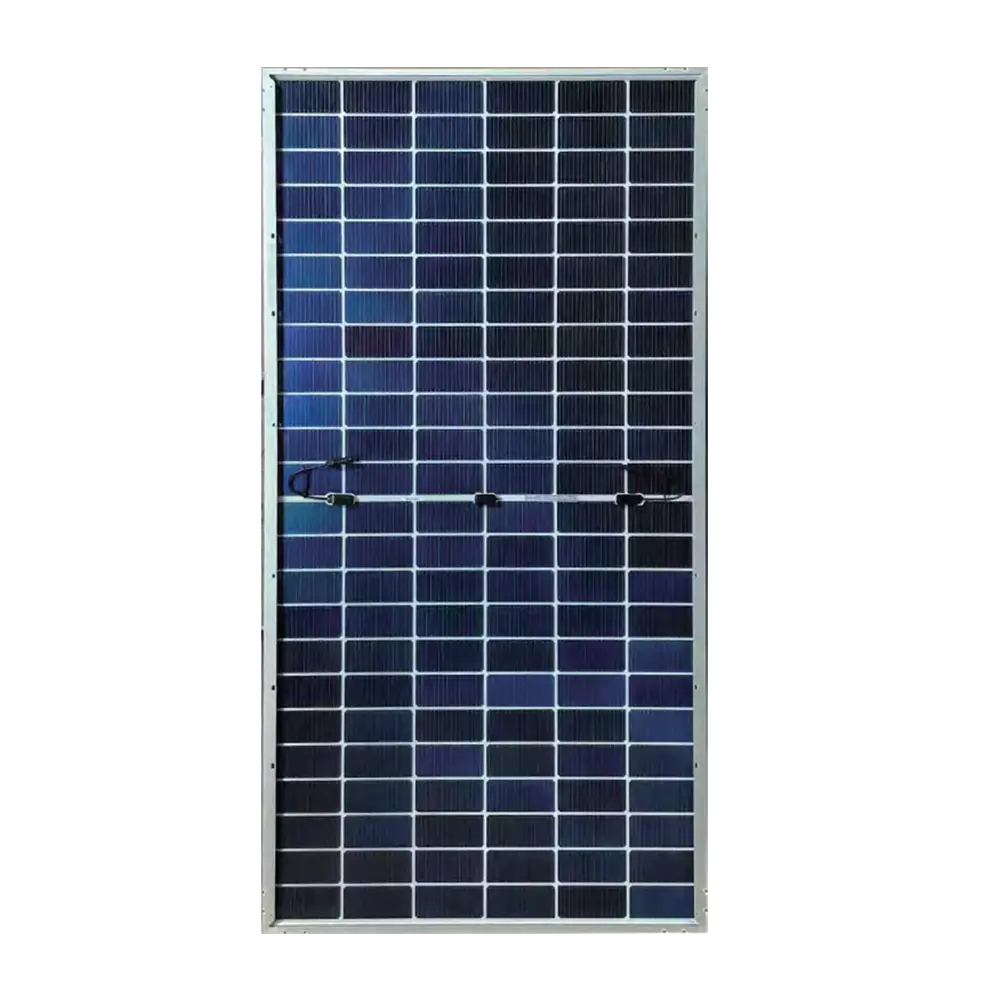
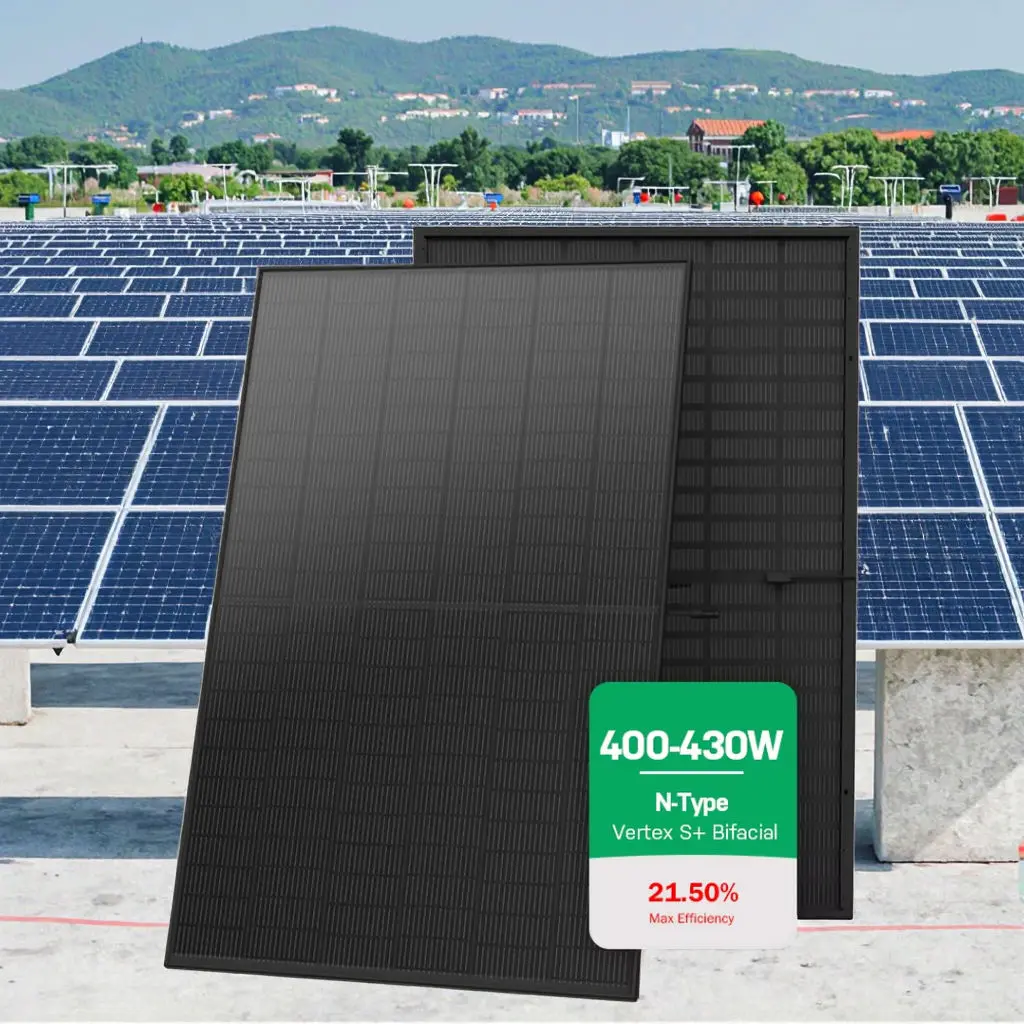
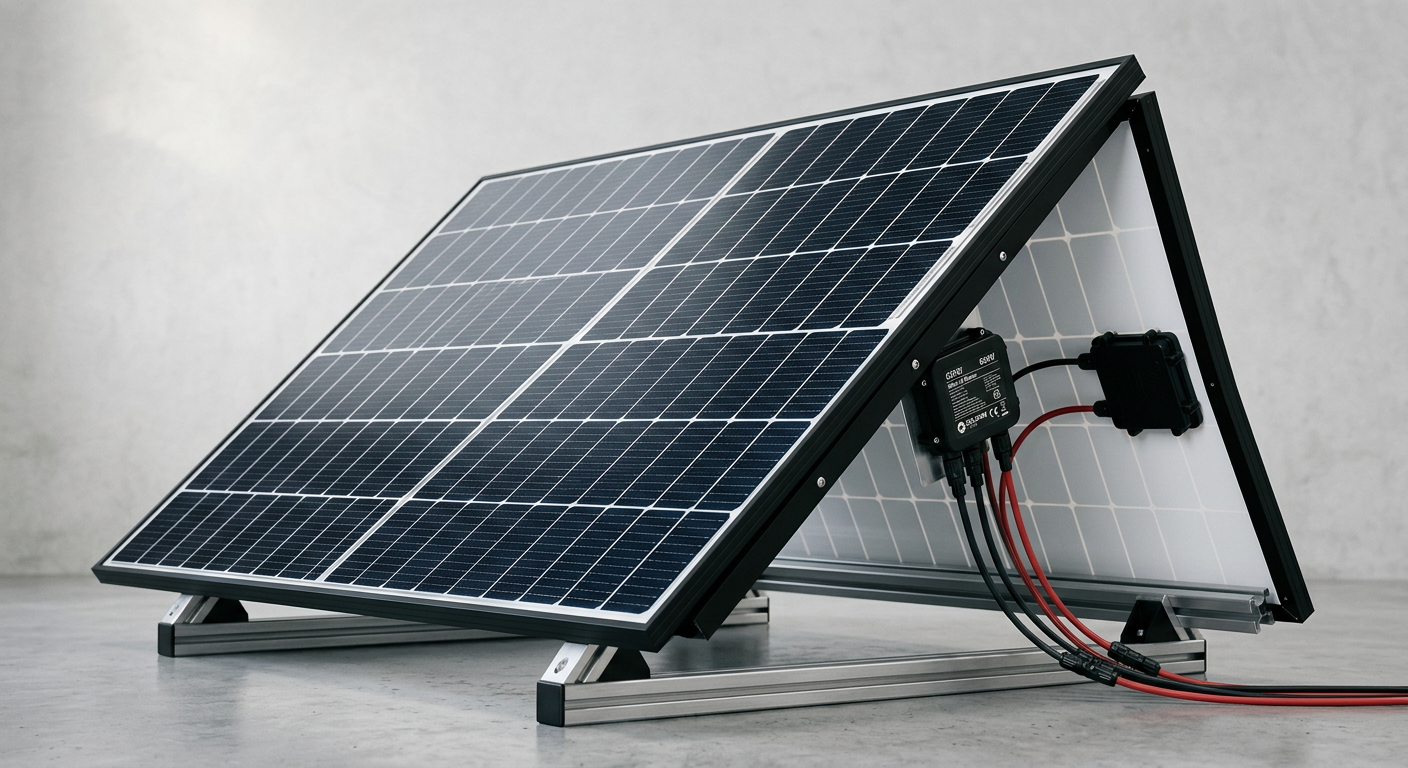
The 620W bifacial solar panel leverages three integrated advanced technologies to achieve superior power output and overall performance. Monocrystalline silicon cells, manufactured from single-crystal ingots, deliver excellent conversion efficiencies exceeding 21.5% on the front surface. The bifacial architecture incorporates transparent backsheets or dual-glass construction, enabling effective rear-side photon capture from reflected ground radiation (albedo effect). This albedo-dependent gain mechanism typically adds 10-25% additional energy yield depending on surface reflectivity and module elevation.
Half-cut cell design divides standard 182mm or 210mm cells into two sections, reducing current flow by 50% and minimizing resistive losses (I²R losses). This configuration improves shade tolerance and lowers operating temperatures by 3-5°C compared to full-cell designs. Multi-busbar (MBB) technology with 9-12 busbars further reduces series resistance and enhances light capture by narrowing finger spacing. The combination of these technologies enables reliable 620W output in a module footprint only marginally larger than previous 450W predecessors.
Key Performance Specifications
Modern 620W bifacial solar panels achieve power outputs between 615-625W under standard test conditions (STC: 1000 W/m², 25°C, AM 1.5 spectrum). Bifaciality factors range from 70-80%, indicating that the rear side can generate 70-80% of the front-side power under identical irradiance conditions. Temperature coefficients of -0.34%/°C for power output ensure stable and reliable performance in high-ambient-temperature environments, outperforming polycrystalline alternatives by 15-20% in hot climates.
Mechanical specifications include a 2400 Pa positive load rating and 5400 Pa negative load rating, meeting stringent requirements for high-wind and heavy-snow regions. Module dimensions typically measure 2278mm × 1134mm × 35mm with weights between 31 and 33 kg. These specifications require careful structural compatibility verification when integrating with existing mounting systems.
| Parameter | 620W Bifacial Mono | 450W Standard Mono |
|---|---|---|
| Power Output | 620W | 450W |
| Efficiency | 21.5% | 20.2% |
| Dimensions (mm) | 2278 × 1134 × 35 | 2094 × 1038 × 35 |
| Weight (kg) | 32.5 | 24.0 |
| Bifacial Gain | 10-25% | N/A |
| Product Warranty | 15 years | 12 years |
| Performance Warranty | 87.4% at 25 years | 84.8% at 25 years |
Total Cost Analysis: BOS and Installation Savings
Reduced Component Requirements
Deploying 620W bifacial solar panels reduces the module count per megawatt by approximately 27% compared to 450W alternatives (1,613 modules versus 2,222 modules per MW). This significant reduction creates a positive cascading effect throughout the entire Balance of System (BOS) architecture.
String inverter quantities decrease proportionally because each inverter input channel can accommodate higher DC power input. As a result, the requirements for combiner boxes, DC disconnect switches, and monitoring equipment drop by 20-25%, directly lowering procurement costs.
Simplifying wiring architecture delivers substantial copper savings. With fewer modules per string, the total length of DC cable runs between arrays and inverters is significantly reduced. For a typical 100 MW utility-scale project, this translates to a 15-18% reduction in total cable length, resulting in savings of $1.2-1.5 million in copper costs at current market prices. Connector quantities also decrease proportionally, reducing both material costs and potential failure points requiring ongoing maintenance.
Labor and Installation Efficiency
Installation time per megawatt decreases by 22-28% when using 620W bifacial solar panels due to fewer handling operations. A typical ground-mount installation crew can complete 1 MW in 4.5-5 days with 620W modules, compared to 6-7 days with conventional 450W modules. This efficiency leads to labor cost savings ranging from $8,000-12,000 per MW, depending on regional wage rates and project complexity.
Mounting structure costs also benefit from optimized load distribution. Although individual 620W modules weigh about 35% more than 450W units, the reduced total module count lowers overall structural steel requirements by 12-15%. Pile driving operations decrease proportionally, reducing equipment rental duration and fuel consumption. Additionally, logistics optimization through fewer shipping containers — approximately 30 modules per 40-foot container versus 36 for 450W modules — reduces international freight costs by 8-10% per MW.
| Cost Component (per MW) | 620W Bifacial | 450W Standard | Savings |
|---|---|---|---|
| Module Cost | $185,000 | $162,000 | -$23,000 |
| Mounting Structures | $42,000 | $48,000 | $6,000 |
| Cables & Connectors | $28,000 | $34,000 | $6,000 |
| Inverters & BOS | $65,000 | $72,000 | $7,000 |
| Labor (installation) | $38,000 | $49,000 | $11,000 |
| Transportation | $12,000 | $13,500 | $1,500 |
| Total Installed Cost | $370,000 | $378,500 | $8,500 |
Land Utilization and Energy Yield Optimization
Footprint Efficiency in Ground-Mount Projects
Power density improvements from 620W bifacial solar panels directly impact land acquisition and lease costs. A 620W bifacial system achieves 450-480 kW per hectare in optimized ground-mount configurations, compared to 380-410 kW per hectare for conventional 450W systems. For a 100 MW project, this represents a land requirement reduction from 244 hectares to 208 hectares — a 15% decrease that saves $180,000-360,000 annually in lease payments at typical agricultural land rates of $5-10 per hectare per MW.
Environmental permitting also benefits from the reduced land disturbance. Smaller project footprints minimize habitat disruption, simplify stormwater management plans, and reduce vegetation clearing requirements. In jurisdictions with strict environmental impact assessment requirements, this can accelerate permitting timelines by 2-4 months, indirectly saving $200,000-400,000 in delayed revenue and extended development costs.
Bifacial Energy Gain in Real-World Conditions
Bifacial energy gain varies significantly with ground surface albedo and module elevation. White gravel or concrete surfaces (albedo 0.6-0.8) can deliver 20-25% rear-side gain, while natural grass (albedo 0.20-0.25) typically provides 10-15% gain. Optimal tilt angles for bifacial systems are often reduced by 5-10° compared to monofacial installations to maximize rear-side irradiance exposure.
Field studies show that 620W bifacial solar panels generate 1,850-1,950 kWh per kW annually in high-irradiance regions (GHI >2,000 kWh/m²/year), compared to 1,650-1,750 kWh per kW for monofacial 450W systems. This 12-15% energy yield advantage compounds over the system’s 25-year lifespan, generating an additional 50-75 MWh per MW installed. At wholesale electricity prices of $40-60 per MWh, this translates to $2,000-4,500 in additional annual revenue per MW.
Long-Term Financial Performance
LCOE (Levelized Cost of Energy) Comparison
LCOE calculations take into account capital expenditure, operational expenses, financing costs, and lifetime energy production. For a 100 MW utility-scale project with a 25-year operational life, 620W bifacial solar panel systems achieve an LCOE of $0.0285-0.0310 per kWh, compared to $0.0315-0.0345 per kWh for 450W monofacial systems. This 8-12% LCOE reduction comes from three main factors: lower installed cost per watt ($0.37/W vs. $0.38/W), higher energy yield (1,900 vs. 1,700 kWh/kW/year), and reduced O&M costs.
Degradation rates for premium monocrystalline modules average 0.45% annually, ensuring 87.4% of nameplate capacity remains after 25 years. This outperforms polycrystalline alternatives (0.65% annual degradation) by maintaining 6-8% higher output in years 20-25. Financial models using a 6% discount rate show net present value (NPV) improvements of $4.2-5.8 million for 100 MW projects when selecting 620W bifacial technology over 450W monofacial modules.
ROI Acceleration Factors
Payback periods for 620W bifacial solar panel systems range from 6.2-7.5 years in high-irradiance markets with favorable power purchase agreements (PPAs), compared to 7.0-8.3 years for 450W systems. This 10-12 month acceleration results from combined CAPEX savings and enhanced energy production. Internal rate of return (IRR) improvements of 0.8-1.2 percentage points make these projects more attractive to equity investors and help secure better debt financing terms.
O&M cost efficiency benefits from reduced component counts. Fewer modules mean fewer potential failure points, lower inverter maintenance requirements, and simplified monitoring systems. Annual O&M costs for 620W bifacial systems average $12,000-14,000 per MW versus $15,000-17,000 per MW for 450W systems. Over 25 years, this $3,000 annual saving per MW compounds to approximately $75,000 in present value terms at 6% discount rate.
Compliance and Certification Standards
International Quality Benchmarks
Premium 620W bifacial solar panels carry IEC 61215 (design qualification) and IEC 61730 (safety qualification) certifications, ensuring full compliance with international performance and safety standards. Additional testing includes IEC TS 60904-1-2 for bifacial measurement procedures, which validates rear-side power output claims. Potential-induced degradation (PID) resistance testing per IEC 62804 confirms less than 5% power loss after 96 hours at 85°C and 85% relative humidity under -1000V bias.
Environmental durability testing includes salt mist corrosion (IEC 61701) and ammonia corrosion (IEC 62716) protocols, which are critical for coastal installations and agricultural environments. Modules rated for C5 corrosion category (very high corrosivity) maintain structural integrity and electrical performance in harsh marine atmospheres. Mechanical load testing at 5400 Pa negative pressure effectively simulates extreme wind uplift and heavy snow accumulation scenarios.
Bankability and Financing Advantages
Tier 1 manufacturer classification by Bloomberg New Energy Finance (BNEF) significantly impacts project financing terms. Banks and institutional investors typically require Tier 1 modules for non-recourse project finance due to demonstrated vertical integration, financial stability, and proven track records. This classification can reduce debt interest rates by 50-100 basis points, potentially saving $2-4 million in financing costs for a 100 MW project.
Insurance underwriters assess module quality certifications when determining coverage terms and premiums. Projects using IEC-certified 620W bifacial modules from Tier 1 manufacturers usually secure 15-20% lower insurance premiums compared to non-certified alternatives. Technical due diligence by lenders’ independent engineers focuses on module bankability, warranty enforceability, and manufacturer solvency — areas where premium 620W bifacial products demonstrate clear advantages.
FAQ
Q1: What is the typical cost premium for 620W bifacial panels compared to 450W modules, and at what project scale does the TCO break even?
The module-level cost premium for 620W bifacial solar panels ranges from 12-15% ($0.30/W vs. $0.36/W). However, at the system level, TCO breaks even at approximately 5-10 MW project scale. BOS savings, reduced installation labor, and enhanced energy yield effectively offset the higher module price. For projects above 20 MW, 620W bifacial systems deliver 2-4% lower total installed cost per watt while generating 12-15% more energy over 25 years.
Q2: How do bifacial panels perform in low-albedo environments like dark soil or asphalt surfaces?
In low-albedo conditions (0.15-0.20), bifacial gain reduces to 8-12%, compared to 20-25% on high-albedo surfaces. Nevertheless, 620W bifacial solar panels still outperform 450W monofacial alternatives thanks to their superior front-side efficiency (21.5% vs. 20.2%). The combined effect delivers 10-12% higher overall energy yield even in suboptimal albedo conditions. Simple ground surface modifications, such as adding white gravel, can cost-effectively boost bifacial gain by an additional 8-10 percentage points.
Q3: Are existing mounting structures compatible with the larger dimensions and weight of 620W modules?
Most modern fixed-tilt and single-axis tracker systems can accommodate 620W bifacial solar panels with only minor adjustments. The 8-10% increase in dimensions and 35% increase in weight require structural load verification, especially for wind and snow ratings. Tracker manufacturers generally offer compatible torque tube specifications, although older systems (pre-2020) may need reinforcement. A structural engineering review typically costs $15,000-25,000 per 100 MW but helps prevent expensive modifications during construction.
Conclusion
Upgrading to 620W bifacial solar panels delivers measurable project cost reductions through optimized BOS expenses, enhanced land efficiency, and superior long-term energy yield. Although the upfront module cost is higher, the total installed cost per watt and LCOE metrics clearly favor high-power bifacial technology for utility-scale and commercial solar projects exceeding 10 MW capacity.
System-level analysis shows 2-4% CAPEX savings, 12-15% higher energy production, and 8-12% lower LCOE compared to conventional 450W monofacial modules.
Procurement teams should carefully evaluate site-specific albedo conditions, structural compatibility with existing mounting systems, and financing terms to maximize return on investment. Projects in high-irradiance regions with favorable ground reflectivity can achieve payback period reductions of 10-14 months and IRR improvements exceeding 1 percentage point.
The combination of Tier 1 bankability, comprehensive certifications, and proven field performance makes 620W bifacial solar panels the optimal choice for cost-conscious developers seeking a competitive edge in today’s increasingly price-sensitive energy markets.